
Sustainable Energy Management for Businesses: Costs and Impact
Energy bills are only part of the cost of wasted power. Sustainable energy management for businesses means tracking how a site uses energy and identifying practical ways to reduce consumption and environmental impact. An energy audit can show where energy is going and which changes, from efficient lighting to renewable energy, may suit the business.
▮Key Takeaways
- Start with an energy audit to find where energy is being used and which improvements may suit your site.
- Compare utility bills and meter data over time to spot patterns, peak use and areas for closer attention.
- Consider practical upgrades such as LED lighting, smart controls, energy management software and renewable energy.
- Track energy use, costs and environmental impacts to see whether changes are moving the business in the right direction.
- Use ISO 50001, the international energy management standard, as a reference when shaping a structured approach.
Before making changes, it's reasonable to want a clear view of the effort involved and the likely benefits. The right steps depend on the building, equipment, operating hours and energy-use patterns, so a measured approach is more useful than upgrading everything at once.
This article explains how to assess utility bills and meter data, compare potential improvements and understand the environmental effects of energy use. It also covers what to consider when planning costs, from simple operational changes to equipment and energy management systems, so you can set priorities around your business's needs.
▮What is sustainable energy management?
For Australian businesses, sustainable energy management means organising energy use to reduce consumption, environmental impacts and operating costs. It combines efficiency, conservation and renewable energy with regular measurement, so decisions reflect how a site actually operates.
Energy efficiency assessments
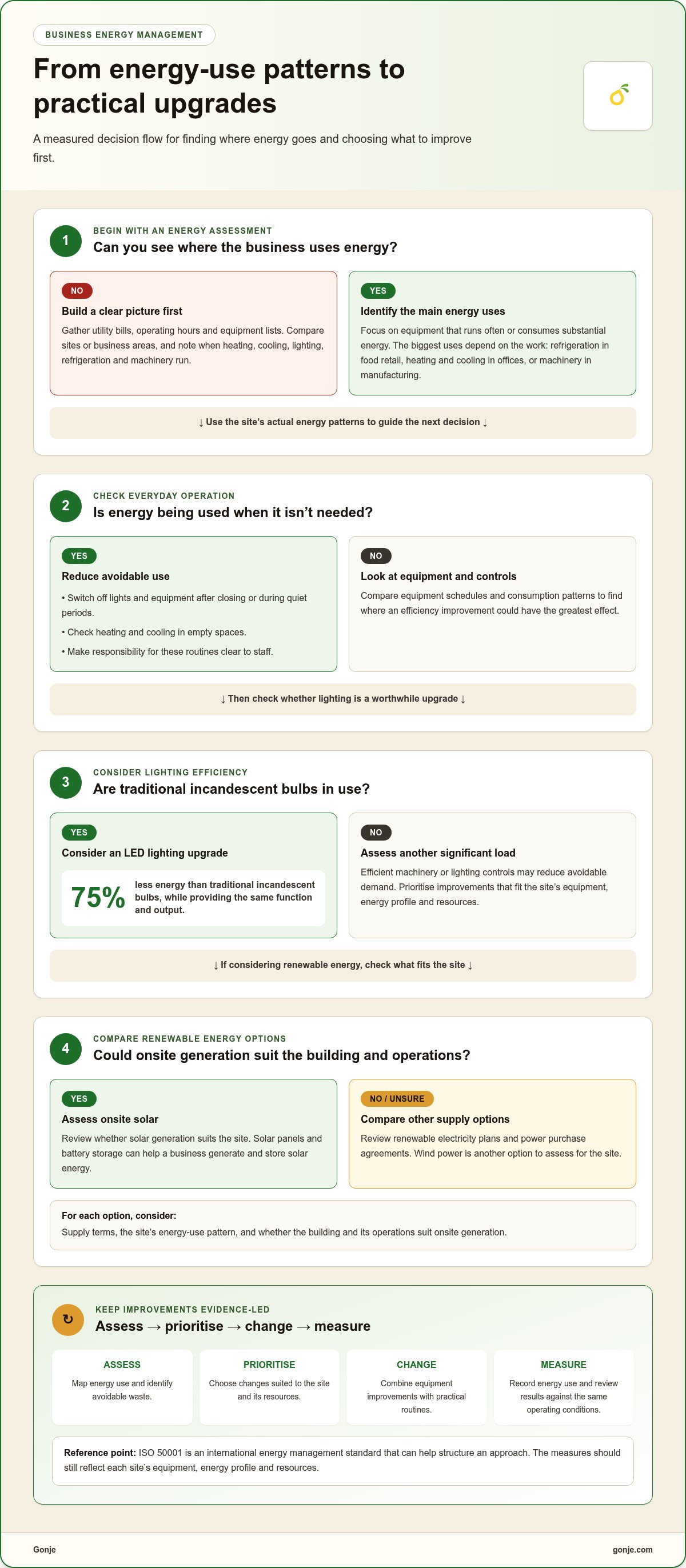
An energy efficiency assessment maps where a business uses electricity and other energy, then identifies avoidable waste. Start with utility bills, operating hours and equipment lists. Compare sites or business areas, noting when heating, cooling, lighting, refrigeration and machinery run. Tailor the assessment to the organisation's size, energy expenditure and resources. Use the findings to prioritise improvements that fit the site, rather than replacing equipment before identifying the problem.
Energy conservation measures
Energy conservation cuts unnecessary use without requiring a major equipment change. Set routines for switching off lights and equipment when they're not needed, including after closing or during quiet periods. Check whether heating and cooling are operating in empty spaces, and make responsibility clear to staff. For lighting upgrades, LEDs use 75% less energy than traditional incandescent bulbs while providing the same function and output. Combine equipment changes with simple daily practices to support lasting efficiency.
Renewable energy options
Renewable energy comes from naturally replenished sources, including solar, wind and wave energy. Businesses can assess onsite solar generation or compare renewable electricity plans and power purchase agreements. Review supply terms, how each option matches the site's energy-use pattern, and whether onsite generation suits the building and its operations. Solar panels and battery storage can help a business generate and store solar energy; wind power is another option to assess for the site.
Business energy uses and efficiency opportunities
The biggest energy uses depend on the work a business does. A food retailer may rely on refrigeration, while an office may use more energy for heating, cooling, lighting and computers. Manufacturing sites may depend on energy-intensive machinery. Compare equipment schedules and consumption patterns to find where efficiency improvements could have the greatest effect. Efficient machinery or lighting controls, for example, can reduce avoidable demand. Start by assessing equipment that runs often or consumes substantial energy.
Build the work into a repeatable cycle: assess use, set improvement priorities, make changes, then measure the results. Keep records of energy use and review them against the same operating conditions. ISO 50001 is an international standard relevant to business energy management, according to the International Organization for Standardization. It offers a recognised reference for structuring an approach, while the measures themselves should reflect each Australian site's equipment, energy profile and resources.
▮What environmental impacts can businesses expect?
Energy choices affect more than a business's electricity bill. Tracking environmental effects alongside energy use helps identify useful changes and assess their value over time.
Environmental impacts of energy use
Energy use can affect air quality, climate, water quality, thermal pollution and solid waste disposal. The impacts depend on the energy sources a business uses and the resources its operations consume. For example, reducing electricity demand can lower reliance on energy generated from fossil fuels. Reviewing energy use alongside waste and resource use gives businesses a broader picture of their environmental footprint.
Reducing business environmental impact
Start by recording energy consumption, operating costs and relevant environmental measures. Compare results over time and link each change to a specific action, such as reducing unnecessary equipment use or adopting renewable energy. This helps establish what works at a particular site. Businesses can also share progress transparently, including setbacks, rather than reporting only successes.
Long-term benefits can extend beyond emissions. Better control of energy use may help reduce procurement costs and exposure to fossil-fuel price fluctuations. Efficient systems may also face less strain, potentially reducing repairs or replacements over time. Outcomes depend on how a business operates, the equipment it uses and the energy sources available. Tracking results helps show whether an improvement is delivering environmental and financial value.
Support described for Australian business energy upgrades includes tax rebates, subsidies for renewable energy installations and research grants for sustainable technologies. These are broad types of support, not one universal offer. When planning an upgrade, identify the technology, its purpose and its expected environmental benefit. Keep these details together to assess project costs and outcomes clearly.
Environmental knowledge also comes from education and research. The University of Queensland lists environmental sciences as first in Australia and 18th in the world in the QS World University Rankings 2026. For business decision-makers, the practical lesson is to use credible evidence when comparing emerging technologies. A new system should address a clear energy or environmental need, not simply sound innovative.
Make environmental improvement part of regular business planning. Review energy consumption, costs, emissions and renewable energy use together, then prioritise the biggest opportunities. Share measures and results with staff and stakeholders. A consistent record makes it easier to track progress, explain decisions and adjust actions when the evidence shows an approach isn't working.
▮Technology upgrades and energy management systems
Technology helps businesses understand where energy goes and put improvements into practice. Pair equipment changes with an ongoing management process, then measure whether consumption changes.
Energy management systems
An energy management system is an ongoing process for identifying, planning and implementing improvements in an organisation's energy use. It can combine energy management software with clear targets and regular reviews. For example, a business can use software to identify inefficiencies, set a target and track whether later changes reduce consumption. The system works best when staff know who reviews the information and acts on it.
Keep the measures practical. Track energy use, costs, carbon emissions, renewable energy use and efficiency ratios over time. Compare each measure with the business's own earlier results, then link changes to specific actions. If a lighting upgrade is followed by lower electricity consumption, record when it happened and the operating conditions. This helps distinguish a genuine improvement from changes in opening hours or activity.
Energy technology upgrades
Choose upgrades that address an identified source of wasted energy. LED lighting, smart HVAC systems and energy management software are options for Australian businesses. Light sensors can switch lights off when an area is empty, while smart controls can help manage heating and cooling. A retailer, for example, could assess LED lighting and sensors in areas with changing occupancy. Match each technology to the work and conditions of the space.
- Lighting: Use LED fittings and sensors where lights are often left on in unoccupied areas.
- Heating and cooling: Review smart HVAC controls against operating hours and room use.
- Energy data: Use management software to identify inefficiencies and set improvement targets.
Energy systems performance
After installation, check whether each system performs as intended. Compare consumption and operating costs before and after the change, noting any shifts in production, opening hours or occupancy. For renewable energy, track its use alongside overall consumption. These measures help show whether an upgrade is improving efficiency or simply shifting when energy is used.
Some businesses can adjust consumption in response to grid conditions through demand response programmes. This suits operations that can change or pause certain loads without disrupting essential work. IoT devices and AI tools can support monitoring with real-time data and predictive analytics. They can reveal patterns, but the business still needs clear targets, regular measurement and people responsible for acting on the findings.
Plan upgrades in stages. First, identify the energy source or system causing the greatest inefficiency. Then select technology that addresses it and define a performance measure before installation. High implementation costs and technical complexity can be challenges, so weigh the expected operational improvement against the effort required. Keep the process manageable, using measured results to decide what to improve next.
▮Analysing utility bills and meter data
Utility bills show what a business pays; meter data helps explain when energy is used. Read them together to connect consumption patterns with operating costs and practical decisions.
Begin by sorting bills by site, energy type and billing period. Separate electricity from gas or other fuels, then compare each site's use and costs over time. Note changes in opening hours, production or occupancy so a shift in activity isn't mistaken for an efficiency improvement. This first review can show which parts of the business need closer attention.
Next, examine the bill's demand and usage details. Peak and off-peak consumption, maximum demand and power factor can all affect electricity contracts. Check whether high usage coincides with busy operating periods or whether equipment keeps running during quieter hours. These details help explain contract cost drivers and identify opportunities to adjust energy use or review the plan.
- Compare: Review energy type, site and billing period separately.
- Look for patterns: Match higher consumption with operating hours and activity.
- Investigate: Check peak use, maximum demand and power factor.
Smart meters can show energy-use patterns in real time. Compare busy and quiet periods, then investigate unexpected increases. For example, if a shop's electricity use remains high after closing, check which equipment stays on and whether it needs to. Meter readings are more useful when staff connect them to daily routines and record what they find.
AI-powered analytics can help identify energy-use trends and areas for improvement. Treat results as a prompt to investigate: compare a flagged period with meter readings, operating schedules and equipment use. If analytics indicate an unusual rise, look for a change in activity or a system running longer than intended. Base decisions on the evidence and the business context.
Build a reporting routine around clear measures: energy use, costs, emissions, renewable energy use and efficiency ratios. Keep definitions consistent across sites so reports show meaningful differences, not mismatched measures. This record can support internal decisions and corporate or government reporting where relevant. Share findings with the people managing equipment and daily operations; a strong energy culture turns data into action.
After each change, review progress using the same measures. If energy consumption and costs aren't moving in the intended direction, revisit the operating data and consider a different action. This keeps the process grounded in what the business can observe, rather than assumptions about which upgrade should work.
▮Why sustainable energy management matters to businesses
Energy management matters because it affects operating costs, environmental impact and business resilience. Its value isn't limited to using less electricity. Understanding how, when and where a business uses energy can shape purchasing decisions, equipment planning and daily operations. That makes energy a cost managers can monitor and improve, rather than a background expense.
Cost control is a practical reason to pay attention. Understanding energy use across an organisation can help reduce procurement costs. Start by identifying which sites and activities drive demand, then use that information to guide purchasing and operational decisions. Renewable energy can also reduce exposure to fossil-fuel price fluctuations. These steps won't remove every cost pressure, but they give a business clearer evidence for managing energy spending.
There can also be benefits for equipment and maintenance. Energy-efficient systems may experience less strain, potentially reducing repairs and replacements over time. For example, a business can track how often equipment operates and compare that with its energy use. If a system runs longer than the work requires, adjusting its schedule may reduce unnecessary demand and wear. Record the change and review both consumption and maintenance needs.
The environmental case extends beyond emissions. Energy use can affect air quality, water quality, thermal pollution and solid waste disposal. Tracking energy consumption alongside waste and resource use makes a business's contribution more visible. Then choose improvements that address the clearest sources of impact. This gives staff a concrete reason for change, rather than treating sustainability as a separate programme disconnected from daily work.
There's a social dimension, too. Customers and stakeholders can better understand a business's environmental choices when it explains them plainly. Share what has changed, what the business measures and where progress remains slow. Transparent communication builds credibility through evidence, not sweeping claims. A shop, for instance, can describe its energy-saving actions while being open about the work still underway.
Make the effort part of routine management. Set a clear goal, assign responsibility, track results and revisit the plan as operations change. Senior executive commitment helps give energy management direction, while staff knowledge can reveal practical improvements on the floor. This is how a sustained program can turn individual savings into a consistent way of working. To explore energy management support, take the next step from measurement to a plan that fits your business.
▮Gonje: Multicultural & Specialty Food Delivery
Gonje connects Australian customers with multicultural and specialty foods, everyday groceries and ready-to-eat restaurant meals. For businesses reviewing their energy use, Gonje's Software as a Service supports merchant operations and market analytics. That may be relevant when digital tools are part of broader business planning, but food delivery and merchant software don't replace an energy assessment or an energy management system.
Turn to Gonje when your business or household needs access to diverse food options, or when merchant operations and market analytics are in view. Keep energy decisions grounded in your own consumption data and operational needs. For more on Gonje's offerings, visit gonje.com.
▮Make your next energy decision a practical one
Assign someone to keep energy improvements moving. Set a review point, record what has changed and decide on the next action. This simple routine helps make sustainable energy management for businesses part of everyday operations, rather than a project that loses momentum after the first upgrade.
Gonje offers Energy as a Service and Software as a Service, alongside Multicultural & Specialty Food Delivery and Ready to Eat Restaurant Meals Delivery. These offerings serve different business needs, so choose the next step that fits the work in front of you. If you'd like to discuss Gonje's services, contact Gonje about energy management.
Start with a clear need and base your next move on what your business measures. Steady progress begins with one useful decision.
▮Frequently Asked Questions
How can progress be effectively reported and communicated?
Use a short report that links each action to a measured result. For example, record the equipment changed, the period reviewed and what happened to energy use, costs and emissions. Explain any changes in operating hours or production that could affect comparisons. Share the report with staff responsible for facilities and business decisions, then communicate successes and setbacks plainly to customers and stakeholders.
How can these challenges be overcome?
Break the work into manageable stages and assign each stage a clear owner. Where upfront investment is a barrier, energy-saving performance contracts are one way organisations can address initial costs. Set priorities based on expected energy improvements and available resources, then build technical capability as the programme develops. Senior leaders can keep decisions moving by setting direction and making energy performance part of routine business planning.
How do renewable energy sources fit into the picture?
Renewable energy can supply some or all of a business's electricity, depending on the option and site. Compare renewable electricity plans with onsite generation by reviewing supply terms, operating patterns and how much generated power the business can use. Solar PV, batteries and power purchase agreements each work differently. A business with daytime demand may value onsite solar differently from one operating mainly outside daylight hours.
What key performance indicators should be tracked?
Track energy consumption, energy costs, carbon emissions, renewable energy use and efficiency ratios. Choose measures that suit the business's priorities, such as energy used per unit produced or per occupied area. Keep calculation methods and reporting periods consistent across sites. If production, occupancy or opening hours change, note that alongside the results so managers can interpret movements accurately, rather than attributing every change to an upgrade.
What obstacles do organisations face when implementing sustainable practices?
Common obstacles include upfront implementation costs, technical complexity and unclear responsibility for ongoing work. Businesses may also struggle to compare sites if teams record energy use differently. Address these barriers by assigning an executive sponsor, setting shared measurement methods and prioritising changes in stages. Start with a manageable project, document the process and use its results to guide later decisions.
How can Australian businesses conduct an energy audit and create an energy management plan?
Begin by gathering utility bills, meter readings, operating schedules and equipment information for each site. Walk through the premises and match major energy uses to their operating times. Record opportunities, rank them by business priority, then assign an owner and a success measure to each action. The plan should set review dates and explain how staff will report changes or issues.
What are the costs and payback periods for commercial solar, batteries, and energy efficiency upgrades in Australia?
Costs and payback depend on system size, site conditions, energy demand, installation requirements and how much generated power is used onsite. Compare each upgrade's upfront investment with its expected ongoing bill savings. For solar and batteries, consider how generation and storage align with business operating hours. For efficiency projects, assess the equipment involved and the energy-use reduction needed to recover the investment.
What energy reporting and emissions disclosure rules apply to Australian businesses?
Reporting obligations depend on the business and the framework that applies to it, so separate formal disclosure from voluntary performance reporting. Australian Government guidance for large energy users is designed for energy-intensive businesses with net energy consumption of more than 0.05 PJ per year. Businesses can prepare by keeping consistent records of energy use and emissions, with clear methods and supporting evidence for reported figures.
 Tiktok
