
Nigerian Restaurant Near Me: Find Real Jollof and Suya

You search nigerian restaurant near me, hoping for a plate of deeply flavoured jollof rice, a little heat from suya and a meal that feels worth the trip. But nearby results can be a mix of old listings, changing opening hours and businesses that take pre-orders rather than offering daily dine-in service.
Here is an easier way to find your next West African favourite. Learn what to look for on a menu, how to check nearby options before heading out, and when marketplace ordering can help you skip the extra search. Whether you are craving jollof rice near me or shopping for ingredients to cook at home, start here.
Restaurant search results change by suburb and trading hours. Check the current menu and ordering details before you travel. If you would rather eat at home, browse Gonje marketplace listings for Nigerian and West African food, spices and snacks, then confirm availability for your address.
▮ What Makes Nigerian Food Special?
Nigerian food brings together bold seasoning, satisfying staples and dishes made for sharing. Recipes vary between regions, families and cooks, so a menu is your best guide to what a particular kitchen serves. Jollof rice and suya may be familiar favourites, while soups and swallow dishes offer a different way to explore the table.
West African cooking is diverse, too. Nigerian and Ghanaian jollof, for example, have their own traditions and variations. Rather than expecting one version to represent every cook, look for the dish you want and ask how the restaurant prepares it. Curious, clear questions make ordering easier.
▮ Classic Dishes to Look For
Use these menu favourites as a starting point when searching for suya near me or planning your first Nigerian meal.
Rice cooked with a seasoned tomato and pepper base. Look for menu details on sides, protein and spice level.
Seasoned grilled meat, often served on skewers. Ask about the protein, heat and ingredients in the spice blend.
A rich soup made with ground melon seeds. It is often served with a starchy accompaniment and may include greens or protein.
A smooth, stretchy accompaniment commonly enjoyed with soups such as egusi. Check how it is prepared and served.

▮ How to Find Nigerian Food Near You in Australia
Start with your suburb or postcode. Search maps and local listings for "Nigerian restaurant", "West African restaurant", "jollof rice", "suya" or "African grocery". Searching a few related terms can reveal restaurants, caterers and specialty sellers that one phrase might miss.
- The venue's current menu and whether jollof, suya or egusi is available that day.
- Opening hours and whether you need to book or pre-order.
- Whether the business offers dine-in, takeaway, catering or delivery.
- Ingredients and allergen information if you have dietary needs. Suya spice blends may contain peanuts, so ask the seller or restaurant directly.
Some food businesses focus on catering, pop-ups or orders made in advance. A quick check of the business's own listing or social page, or a direct message, can save you a wasted trip. Looking for an african supermarket near me? Search for African grocery shops as well as restaurants, and check that the ingredients you want are in stock before travelling.
When the nearby search does not fit your schedule, marketplace shopping offers another route. Instead of visiting several shops, you can browse listed dishes, spices and snacks online, compare the available details and order if the seller's options suit your plans. Gonje listings and delivery availability can vary by address, so check what is currently available for you.
▮ Cook Jollof at Home or Order In?
Cooking jollof at home gives you control over the ingredients, seasoning and heat. Start with a recipe, gather the ingredients it calls for and take your time with the tomato and pepper base. It is a satisfying option when you want to explore the process or share a home-cooked meal.
Ordering makes sense when you want the flavours without planning, shopping and cooking first. Gonje marketplace listings include Nana Africa's West African Ghanaian jollof rice options. Check the product description, serving details and availability before ordering, especially if you are looking for a specific Nigerian-style recipe.

Read the listing before adding to cart. Confirm the dish name, style, ingredients, serving information and delivery availability. If you have an allergy or a specific dietary requirement, contact the seller to clarify details rather than guessing.
▮ Find West African Favourites on Gonje
Looking for an easier option than searching restaurant by restaurant? Explore real Gonje vendors and check their current listings. These are marketplace sellers, not a directory of dine-in restaurants, so review each storefront for the products and order options that suit you.
- Nana Africa, Melbourne: Browse the vendor's storefront for its West African BBQ Spice Rub SUYA and listed Ghanaian jollof rice options. The spice rub is a handy way to bring a West African-inspired seasoning to your own grill. For more ideas, read Turn Every BBQ into a West African Feast with Nana Africa Suya Spice.
- Olori Afrikitchen, Melbourne: Explore the Olori Afrikitchen listings, which include Nigerian dishes such as egusi soup and other prepared foods. Check the listing for current details and availability.
- Estelle's Delight, Perth: Browse Estelle's Delight for Nigerian snacks including chin-chin, along with listed platters and drinks.

Gonje brings shoppers and local vendors together in one place, so you can browse without making a separate trip to each seller. For more ideas, explore authentic ethnic meals delivered, our practical guide to ethnic grocery delivery in Australia, and tips for making shared family meals easier.
▮ Frequently Asked Questions
How do I find a Nigerian restaurant near me?
Search maps using your suburb or postcode and terms such as "Nigerian restaurant", "West African food" or "jollof rice". Check the current menu, opening hours and ordering options directly before travelling, as availability can change.
Where can I get jollof rice delivered in Australia?
Check restaurant ordering options in your area and browse marketplace listings such as Nana Africa's Ghanaian jollof rice on Gonje. Availability and delivery options vary by address, so review the listing and confirm what is offered for your location.
What is suya?
Suya is a West African grilled meat dish seasoned with a distinctive spice blend. Recipes vary. Ask what protein and seasonings are used, and check carefully for peanuts or other allergens if needed.
Is jollof rice spicy?
It can be, but the heat depends on the cook and recipe. Ask the restaurant or seller about its spice level, especially if you prefer a milder meal.
Where can I find an African supermarket near me?
Search maps for "African grocery" or "African supermarket" with your suburb or postcode. Check the shop's current hours and call ahead about specific ingredients. You can also browse specialty grocery listings on Gonje and confirm what is available for your address.
▮ Bring New West African Flavours to Your Table
Browse Nigerian and West African food, spices and snacks from Gonje marketplace vendors. Check the listings, find what suits your plans and explore from home.
Shop NowShare your dishes, spices or specialty foods with shoppers looking for new flavours. Explore selling through Gonje and see how to get started.
Become a sellerAfrican Supermarket Near Me: West African Staples Online

Searching for an African supermarket near me in Melbourne, Sydney or somewhere else in Australia? Whether you are looking for fufu flour for soup, egusi for a family recipe or suya spice for the barbecue, tracking down the right ingredients can take more than one shop. Online shopping gives you another way to explore African food stores, compare products and find local vendors without making a special trip first.
African food is becoming a more visible part of Australia's diverse food scene, enjoyed by people cooking familiar dishes, discovering new flavours and sharing meals across generations. Start with the staples you need, check the details, then browse local vendors and marketplace listings from home.
Quick Bite
Looking for an African food store online? Begin with the ingredient, not just the cuisine label. Check the product format, ingredients, pack size and seller details so you can choose what suits your recipe.
▮ What Can You Find at an African Supermarket?
A good African supermarket brings together ingredients for everyday cooking, special dishes and satisfying snacks. Stock can differ between shops and sellers, but these West African staples are useful to know when you browse:
Flour used to prepare a soft, starchy accompaniment for soups and stews. Check the base ingredient, as products can be made from cassava, plantain, yam or blends.
Melon seeds, often sold whole or ground, used in egusi soup and other dishes. Check which form the listing offers.
Fresh or processed ingredients for frying, boiling, stews and flour-based dishes. Confirm whether a listing is for fresh produce, frozen food or flour.
Suya spice brings a bold seasoning option for grilling, while chin chin is a crunchy snack. Check ingredients and allergen information before buying.
Planning jollof rice? Your list may include rice, tomatoes, peppers, onions, oil and seasonings. Recipes vary, so choose the ingredients and spice level that suit your kitchen. For a little more inspiration, read our guide to turning every BBQ into a West African feast with Nana Africa Suya Spice.
▮ How to Choose a Good African Supermarket
Whether you visit a nearby shop or order from an African food store online, clear product information makes shopping easier. Look for a store or listing that helps you understand what you are buying and how it fits your recipe.
Smart Shopper Check
- Freshness: For fresh produce, check the seller's notes, availability and delivery information. For packaged goods, look for intact packaging and date details.
- Range: Can you find the kind of flour, seed, spice or snack your dish needs? Check size and form, not just the product name.
- Provenance: Review the label for ingredients, country-of-origin details, allergen information and manufacturer or importer information where provided.
- Seller details: Check the business location, product description and any information about delivery or collection before ordering.
A useful product listing should help answer simple questions: Is the egusi whole or ground? Which ingredient is the fufu flour made from? Does the suya spice contain peanuts? If a detail matters to your recipe or dietary needs, check the product label or contact the seller rather than guessing.
▮ The Online Marketplace Advantage
Searching for an African supermarket near me can bring up shops in your suburb, but the right ingredient may not be nearby or in stock when you need it. An online marketplace offers another way to browse. You can explore vendors in different locations, compare product information and discover prepared foods and pantry favourites without visiting multiple stores.
Gonje brings together vendors from different Australian locations, including Melbourne and Perth. Product range and delivery options depend on each vendor and listing, so check the details for your location before ordering. If you are browsing from Sydney or another city, use the marketplace listings to see what is currently available to you.
Online shopping can also make it easier to find a specific item such as where to buy plantain chips or suya spice buy online. Browse product details, then explore more ideas in our guides to traditional pantry staples delivery and plantain chips.
▮ Meet West African Food Vendors on Gonje
Explore vendors and products on Gonje to find prepared dishes, snacks and spice blends. Listings can change, so check each storefront for current products and ordering details.
Nana Africa | Melbourne, VIC
Looking for suya spice to bring bold West African flavour to your cooking? Nana Africa lists a West African BBQ Spice Rub SUYA on Gonje. Explore the store and check the listing for product details and current availability.
Olori Afrikitchen | Melbourne
Browse Olori Afrikitchen's marketplace listings for West African prepared foods. The store page includes dishes such as egusi soup and snacks such as chin chin. Visit the Olori Afrikitchen listings to see current offerings.
Estelle's Delight | Perth, WA
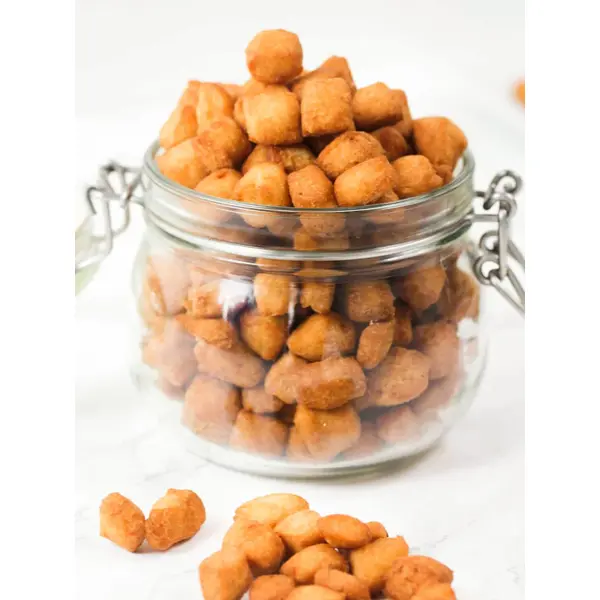
Estelle's Delight focuses on Nigerian snacks, including chin chin, and also lists other treats. Browse the Estelle's Delight storefront for current products and details.
Adejoke's Delicacy | Melbourne
Find prepared meals and dishes through Adejoke's Delicacy. The Gonje storefront includes listings such as egusi soup and jollof rice. Check the vendor page for what is currently available.

▮ Your First Online African Grocery Order
Make your first basket simple. Start with one or two dishes you want to prepare, then list the ingredients you cannot easily find in your usual shop. Compare the product descriptions and seller information before adding items.
Easy Order Checklist
- Choose a dish or snack you want to make or enjoy.
- Search by ingredient and check the exact product format.
- Review ingredients, allergens, pack size and storage details.
- Check seller location and delivery information for your area.
- Confirm the order details before checkout.
Want prepared meals instead of pantry ingredients? Explore our guide to multicultural meals delivered for more ways to discover food from local kitchens.
▮ Frequently Asked Questions
How do I find an African supermarket near me?
Search by your suburb or city to find nearby African grocery shops, then check store information and opening details before visiting. If the ingredient you need is not close by, browse an online marketplace such as Gonje to explore available products and vendors in different locations. Delivery availability depends on the individual listing and your address.
What can I buy at an African food store online?
Depending on the store, you may find flours for swallow dishes, egusi, plantain, yam, rice, spices, prepared foods and snacks such as chin chin. Product selection varies by seller. Check the listing for the exact ingredient, format, pack size and allergen details.
Where can I buy fufu flour online in Australia?
Browse African grocery stores and online marketplaces serving Australian customers, and search by the flour type you need. Fufu flour can refer to different bases, including cassava, plantain or yam, so confirm the product ingredients and preparation directions before ordering.
What is suya spice?
Suya spice is a West African-style seasoning associated with suya, a popular grilled dish. Blends vary, so check the product information for ingredients and allergens. Nana Africa lists a West African BBQ Spice Rub SUYA on its Gonje storefront.
Where can I buy plantain chips?
Check African grocery stores, specialty food shops and online marketplace listings. Explore Gonje's guide to plantain chips for more snack inspiration, and review each product listing for current availability.
Find Your West African Favourites
Browse local vendors, explore pantry ingredients and discover new favourites through the Gonje Marketplace. Check product and delivery details as you shop.
Shop NowFood Vendor or Business Owner?
Share your products with shoppers looking for multicultural groceries, snacks and prepared foods. Explore becoming a Gonje seller and find out how to get started.
Become a SellerSustainable Energy Management for Businesses: Costs and Impact
Energy bills are only part of the cost of wasted power. Sustainable energy management for businesses means tracking how a site uses energy and identifying practical ways to reduce consumption and environmental impact. An energy audit can show where energy is going and which changes, from efficient lighting to renewable energy, may suit the business.

▮Key Takeaways
- Start with an energy audit to find where energy is being used and which improvements may suit your site.
- Compare utility bills and meter data over time to spot patterns, peak use and areas for closer attention.
- Consider practical upgrades such as LED lighting, smart controls, energy management software and renewable energy.
- Track energy use, costs and environmental impacts to see whether changes are moving the business in the right direction.
- Use ISO 50001, the international energy management standard, as a reference when shaping a structured approach.
Before making changes, it's reasonable to want a clear view of the effort involved and the likely benefits. The right steps depend on the building, equipment, operating hours and energy-use patterns, so a measured approach is more useful than upgrading everything at once.
This article explains how to assess utility bills and meter data, compare potential improvements and understand the environmental effects of energy use. It also covers what to consider when planning costs, from simple operational changes to equipment and energy management systems, so you can set priorities around your business's needs.
▮What is sustainable energy management?
For Australian businesses, sustainable energy management means organising energy use to reduce consumption, environmental impacts and operating costs. It combines efficiency, conservation and renewable energy with regular measurement, so decisions reflect how a site actually operates.
Energy efficiency assessments
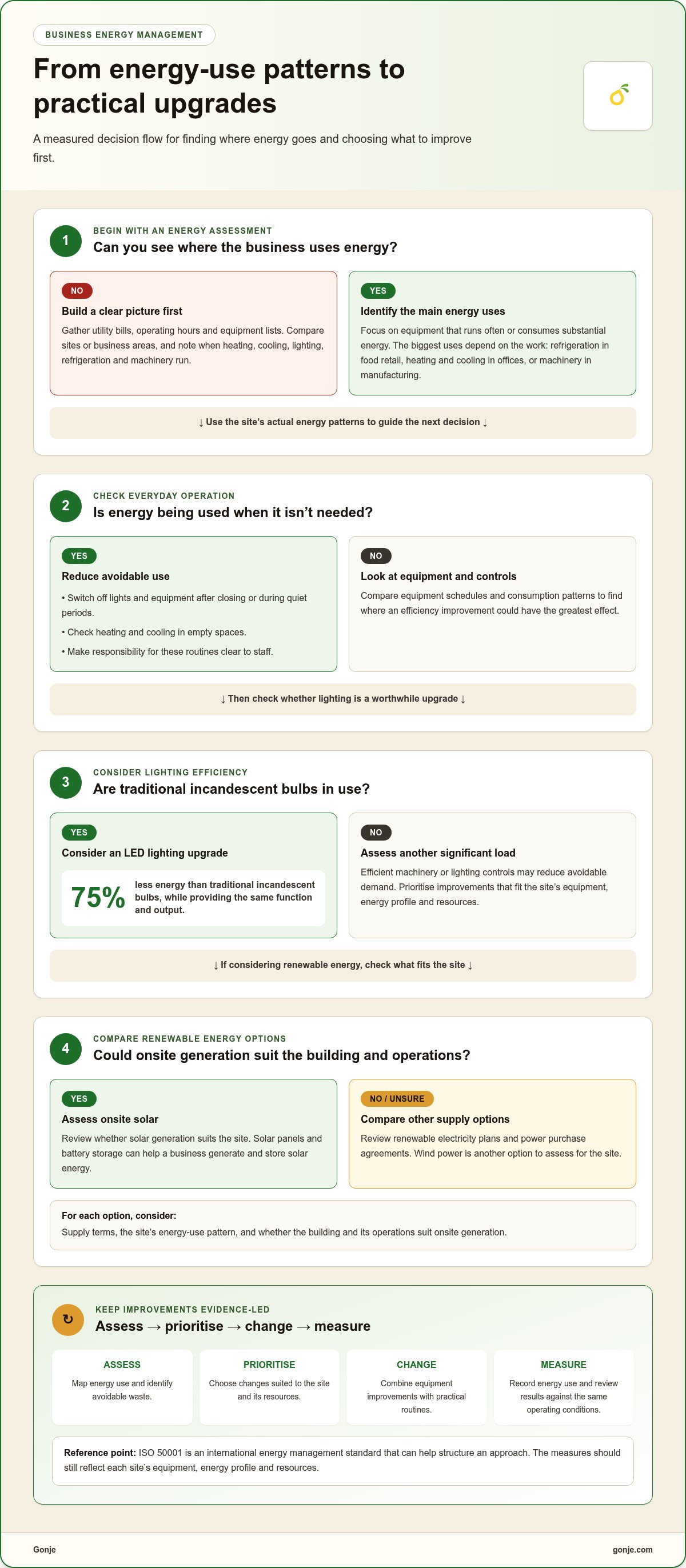
An energy efficiency assessment maps where a business uses electricity and other energy, then identifies avoidable waste. Start with utility bills, operating hours and equipment lists. Compare sites or business areas, noting when heating, cooling, lighting, refrigeration and machinery run. Tailor the assessment to the organisation's size, energy expenditure and resources. Use the findings to prioritise improvements that fit the site, rather than replacing equipment before identifying the problem.
Energy conservation measures
Energy conservation cuts unnecessary use without requiring a major equipment change. Set routines for switching off lights and equipment when they're not needed, including after closing or during quiet periods. Check whether heating and cooling are operating in empty spaces, and make responsibility clear to staff. For lighting upgrades, LEDs use 75% less energy than traditional incandescent bulbs while providing the same function and output. Combine equipment changes with simple daily practices to support lasting efficiency.
Renewable energy options
Renewable energy comes from naturally replenished sources, including solar, wind and wave energy. Businesses can assess onsite solar generation or compare renewable electricity plans and power purchase agreements. Review supply terms, how each option matches the site's energy-use pattern, and whether onsite generation suits the building and its operations. Solar panels and battery storage can help a business generate and store solar energy; wind power is another option to assess for the site.
Business energy uses and efficiency opportunities
The biggest energy uses depend on the work a business does. A food retailer may rely on refrigeration, while an office may use more energy for heating, cooling, lighting and computers. Manufacturing sites may depend on energy-intensive machinery. Compare equipment schedules and consumption patterns to find where efficiency improvements could have the greatest effect. Efficient machinery or lighting controls, for example, can reduce avoidable demand. Start by assessing equipment that runs often or consumes substantial energy.
Build the work into a repeatable cycle: assess use, set improvement priorities, make changes, then measure the results. Keep records of energy use and review them against the same operating conditions. ISO 50001 is an international standard relevant to business energy management, according to the International Organization for Standardization. It offers a recognised reference for structuring an approach, while the measures themselves should reflect each Australian site's equipment, energy profile and resources.
▮What environmental impacts can businesses expect?
Energy choices affect more than a business's electricity bill. Tracking environmental effects alongside energy use helps identify useful changes and assess their value over time.
Environmental impacts of energy use
Energy use can affect air quality, climate, water quality, thermal pollution and solid waste disposal. The impacts depend on the energy sources a business uses and the resources its operations consume. For example, reducing electricity demand can lower reliance on energy generated from fossil fuels. Reviewing energy use alongside waste and resource use gives businesses a broader picture of their environmental footprint.
Reducing business environmental impact
Start by recording energy consumption, operating costs and relevant environmental measures. Compare results over time and link each change to a specific action, such as reducing unnecessary equipment use or adopting renewable energy. This helps establish what works at a particular site. Businesses can also share progress transparently, including setbacks, rather than reporting only successes.
Long-term benefits can extend beyond emissions. Better control of energy use may help reduce procurement costs and exposure to fossil-fuel price fluctuations. Efficient systems may also face less strain, potentially reducing repairs or replacements over time. Outcomes depend on how a business operates, the equipment it uses and the energy sources available. Tracking results helps show whether an improvement is delivering environmental and financial value.
Support described for Australian business energy upgrades includes tax rebates, subsidies for renewable energy installations and research grants for sustainable technologies. These are broad types of support, not one universal offer. When planning an upgrade, identify the technology, its purpose and its expected environmental benefit. Keep these details together to assess project costs and outcomes clearly.
Environmental knowledge also comes from education and research. The University of Queensland lists environmental sciences as first in Australia and 18th in the world in the QS World University Rankings 2026. For business decision-makers, the practical lesson is to use credible evidence when comparing emerging technologies. A new system should address a clear energy or environmental need, not simply sound innovative.
Make environmental improvement part of regular business planning. Review energy consumption, costs, emissions and renewable energy use together, then prioritise the biggest opportunities. Share measures and results with staff and stakeholders. A consistent record makes it easier to track progress, explain decisions and adjust actions when the evidence shows an approach isn't working.
▮Technology upgrades and energy management systems
Technology helps businesses understand where energy goes and put improvements into practice. Pair equipment changes with an ongoing management process, then measure whether consumption changes.
Energy management systems
An energy management system is an ongoing process for identifying, planning and implementing improvements in an organisation's energy use. It can combine energy management software with clear targets and regular reviews. For example, a business can use software to identify inefficiencies, set a target and track whether later changes reduce consumption. The system works best when staff know who reviews the information and acts on it.
Keep the measures practical. Track energy use, costs, carbon emissions, renewable energy use and efficiency ratios over time. Compare each measure with the business's own earlier results, then link changes to specific actions. If a lighting upgrade is followed by lower electricity consumption, record when it happened and the operating conditions. This helps distinguish a genuine improvement from changes in opening hours or activity.
Energy technology upgrades
Choose upgrades that address an identified source of wasted energy. LED lighting, smart HVAC systems and energy management software are options for Australian businesses. Light sensors can switch lights off when an area is empty, while smart controls can help manage heating and cooling. A retailer, for example, could assess LED lighting and sensors in areas with changing occupancy. Match each technology to the work and conditions of the space.
- Lighting: Use LED fittings and sensors where lights are often left on in unoccupied areas.
- Heating and cooling: Review smart HVAC controls against operating hours and room use.
- Energy data: Use management software to identify inefficiencies and set improvement targets.
Energy systems performance
After installation, check whether each system performs as intended. Compare consumption and operating costs before and after the change, noting any shifts in production, opening hours or occupancy. For renewable energy, track its use alongside overall consumption. These measures help show whether an upgrade is improving efficiency or simply shifting when energy is used.
Some businesses can adjust consumption in response to grid conditions through demand response programmes. This suits operations that can change or pause certain loads without disrupting essential work. IoT devices and AI tools can support monitoring with real-time data and predictive analytics. They can reveal patterns, but the business still needs clear targets, regular measurement and people responsible for acting on the findings.
Plan upgrades in stages. First, identify the energy source or system causing the greatest inefficiency. Then select technology that addresses it and define a performance measure before installation. High implementation costs and technical complexity can be challenges, so weigh the expected operational improvement against the effort required. Keep the process manageable, using measured results to decide what to improve next.
▮Analysing utility bills and meter data
Utility bills show what a business pays; meter data helps explain when energy is used. Read them together to connect consumption patterns with operating costs and practical decisions.
Begin by sorting bills by site, energy type and billing period. Separate electricity from gas or other fuels, then compare each site's use and costs over time. Note changes in opening hours, production or occupancy so a shift in activity isn't mistaken for an efficiency improvement. This first review can show which parts of the business need closer attention.
Next, examine the bill's demand and usage details. Peak and off-peak consumption, maximum demand and power factor can all affect electricity contracts. Check whether high usage coincides with busy operating periods or whether equipment keeps running during quieter hours. These details help explain contract cost drivers and identify opportunities to adjust energy use or review the plan.
- Compare: Review energy type, site and billing period separately.
- Look for patterns: Match higher consumption with operating hours and activity.
- Investigate: Check peak use, maximum demand and power factor.
Smart meters can show energy-use patterns in real time. Compare busy and quiet periods, then investigate unexpected increases. For example, if a shop's electricity use remains high after closing, check which equipment stays on and whether it needs to. Meter readings are more useful when staff connect them to daily routines and record what they find.
AI-powered analytics can help identify energy-use trends and areas for improvement. Treat results as a prompt to investigate: compare a flagged period with meter readings, operating schedules and equipment use. If analytics indicate an unusual rise, look for a change in activity or a system running longer than intended. Base decisions on the evidence and the business context.
Build a reporting routine around clear measures: energy use, costs, emissions, renewable energy use and efficiency ratios. Keep definitions consistent across sites so reports show meaningful differences, not mismatched measures. This record can support internal decisions and corporate or government reporting where relevant. Share findings with the people managing equipment and daily operations; a strong energy culture turns data into action.
After each change, review progress using the same measures. If energy consumption and costs aren't moving in the intended direction, revisit the operating data and consider a different action. This keeps the process grounded in what the business can observe, rather than assumptions about which upgrade should work.
▮Why sustainable energy management matters to businesses
Energy management matters because it affects operating costs, environmental impact and business resilience. Its value isn't limited to using less electricity. Understanding how, when and where a business uses energy can shape purchasing decisions, equipment planning and daily operations. That makes energy a cost managers can monitor and improve, rather than a background expense.
Cost control is a practical reason to pay attention. Understanding energy use across an organisation can help reduce procurement costs. Start by identifying which sites and activities drive demand, then use that information to guide purchasing and operational decisions. Renewable energy can also reduce exposure to fossil-fuel price fluctuations. These steps won't remove every cost pressure, but they give a business clearer evidence for managing energy spending.
There can also be benefits for equipment and maintenance. Energy-efficient systems may experience less strain, potentially reducing repairs and replacements over time. For example, a business can track how often equipment operates and compare that with its energy use. If a system runs longer than the work requires, adjusting its schedule may reduce unnecessary demand and wear. Record the change and review both consumption and maintenance needs.
The environmental case extends beyond emissions. Energy use can affect air quality, water quality, thermal pollution and solid waste disposal. Tracking energy consumption alongside waste and resource use makes a business's contribution more visible. Then choose improvements that address the clearest sources of impact. This gives staff a concrete reason for change, rather than treating sustainability as a separate programme disconnected from daily work.
There's a social dimension, too. Customers and stakeholders can better understand a business's environmental choices when it explains them plainly. Share what has changed, what the business measures and where progress remains slow. Transparent communication builds credibility through evidence, not sweeping claims. A shop, for instance, can describe its energy-saving actions while being open about the work still underway.
Make the effort part of routine management. Set a clear goal, assign responsibility, track results and revisit the plan as operations change. Senior executive commitment helps give energy management direction, while staff knowledge can reveal practical improvements on the floor. This is how a sustained program can turn individual savings into a consistent way of working. To explore energy management support, take the next step from measurement to a plan that fits your business.
▮Gonje: Multicultural & Specialty Food Delivery
Gonje connects Australian customers with multicultural and specialty foods, everyday groceries and ready-to-eat restaurant meals. For businesses reviewing their energy use, Gonje's Software as a Service supports merchant operations and market analytics. That may be relevant when digital tools are part of broader business planning, but food delivery and merchant software don't replace an energy assessment or an energy management system.
Turn to Gonje when your business or household needs access to diverse food options, or when merchant operations and market analytics are in view. Keep energy decisions grounded in your own consumption data and operational needs. For more on Gonje's offerings, visit gonje.com.
▮Make your next energy decision a practical one
Assign someone to keep energy improvements moving. Set a review point, record what has changed and decide on the next action. This simple routine helps make sustainable energy management for businesses part of everyday operations, rather than a project that loses momentum after the first upgrade.
Gonje offers Energy as a Service and Software as a Service, alongside Multicultural & Specialty Food Delivery and Ready to Eat Restaurant Meals Delivery. These offerings serve different business needs, so choose the next step that fits the work in front of you. If you'd like to discuss Gonje's services, contact Gonje about energy management.
Start with a clear need and base your next move on what your business measures. Steady progress begins with one useful decision.
▮Frequently Asked Questions
How can progress be effectively reported and communicated?
Use a short report that links each action to a measured result. For example, record the equipment changed, the period reviewed and what happened to energy use, costs and emissions. Explain any changes in operating hours or production that could affect comparisons. Share the report with staff responsible for facilities and business decisions, then communicate successes and setbacks plainly to customers and stakeholders.
How can these challenges be overcome?
Break the work into manageable stages and assign each stage a clear owner. Where upfront investment is a barrier, energy-saving performance contracts are one way organisations can address initial costs. Set priorities based on expected energy improvements and available resources, then build technical capability as the programme develops. Senior leaders can keep decisions moving by setting direction and making energy performance part of routine business planning.
How do renewable energy sources fit into the picture?
Renewable energy can supply some or all of a business's electricity, depending on the option and site. Compare renewable electricity plans with onsite generation by reviewing supply terms, operating patterns and how much generated power the business can use. Solar PV, batteries and power purchase agreements each work differently. A business with daytime demand may value onsite solar differently from one operating mainly outside daylight hours.
What key performance indicators should be tracked?
Track energy consumption, energy costs, carbon emissions, renewable energy use and efficiency ratios. Choose measures that suit the business's priorities, such as energy used per unit produced or per occupied area. Keep calculation methods and reporting periods consistent across sites. If production, occupancy or opening hours change, note that alongside the results so managers can interpret movements accurately, rather than attributing every change to an upgrade.
What obstacles do organisations face when implementing sustainable practices?
Common obstacles include upfront implementation costs, technical complexity and unclear responsibility for ongoing work. Businesses may also struggle to compare sites if teams record energy use differently. Address these barriers by assigning an executive sponsor, setting shared measurement methods and prioritising changes in stages. Start with a manageable project, document the process and use its results to guide later decisions.
How can Australian businesses conduct an energy audit and create an energy management plan?
Begin by gathering utility bills, meter readings, operating schedules and equipment information for each site. Walk through the premises and match major energy uses to their operating times. Record opportunities, rank them by business priority, then assign an owner and a success measure to each action. The plan should set review dates and explain how staff will report changes or issues.
What are the costs and payback periods for commercial solar, batteries, and energy efficiency upgrades in Australia?
Costs and payback depend on system size, site conditions, energy demand, installation requirements and how much generated power is used onsite. Compare each upgrade's upfront investment with its expected ongoing bill savings. For solar and batteries, consider how generation and storage align with business operating hours. For efficiency projects, assess the equipment involved and the energy-use reduction needed to recover the investment.
What energy reporting and emissions disclosure rules apply to Australian businesses?
Reporting obligations depend on the business and the framework that applies to it, so separate formal disclosure from voluntary performance reporting. Australian Government guidance for large energy users is designed for energy-intensive businesses with net energy consumption of more than 0.05 PJ per year. Businesses can prepare by keeping consistent records of energy use and emissions, with clear methods and supporting evidence for reported figures.
Energy as a Service for Australian Businesses: Costs and Financing
Australia's energy-as-a-service market was valued at A$1.89 billion in 2025 and is forecast to reach A$4.39 billion by 2035, with projected growth of 8.80% from 2026 to 2035. For businesses, energy as a service in Australia means paying for an agreed energy-service outcome rather than each unit of energy consumed. A provider can design, finance, operate and maintain the assets behind that outcome.
▮Key Takeaways
- Energy-as-a-Service may cover more than on-site generation: projects can include batteries, demand response, refrigeration, heating, lighting and equipment upgrades.
- Map your energy use and operating needs before assessing a proposal. This helps clarify which assets and services should sit within the project.
- Compare the service outcome, ongoing fee and responsibilities for operating and maintaining assets, not just the equipment being installed.
- Efficiency and optimisation, along with third-party providers, are projected to be growing parts of Australia's market through 2035.
- Use the market outlook as context, then judge a project by how its design and financing fit your business's energy needs.
This model can reduce the upfront cost of energy equipment and shift some demand-management responsibilities to a supplier. Its value depends on how well the project fits a business's energy use and whether the payment terms make sense. An ongoing fee is worth considering only when the service and costs are clear.
This guide explains how Energy-as-a-Service works, what providers may include and which factors shape project costs and financing in Australia. It also explores the market's growth outlook, helping you understand the broader shift and assess whether this approach suits your business's energy needs.
▮Competitive landscape and leading companies
Australia's EaaS market includes third-party providers and energy partners. Compare the work each will deliver, not just the company name.
Providers compete through the project they can deliver, such as improving compressed-air systems or replacing a gas boiler with an electric or hybrid alternative. A business may also modernise motors, pumps, cooling or refrigeration. These are different jobs, so compare proposals against the same site need, equipment and service outcome. Australia's third-party provider segment is projected to grow at a CAGR of 9.3% from 2026 to 2035.
Upfront cost is one key difference from buying a system outright. With a direct purchase, the business pays for the equipment and arranges its operation and maintenance. An EaaS arrangement can spread asset costs across an ongoing fee, while the provider designs and operates the project. Compare the total payment commitment, included services, asset ownership and end-of-agreement arrangements. A lower initial outlay alone does not show which option costs less over the full term.
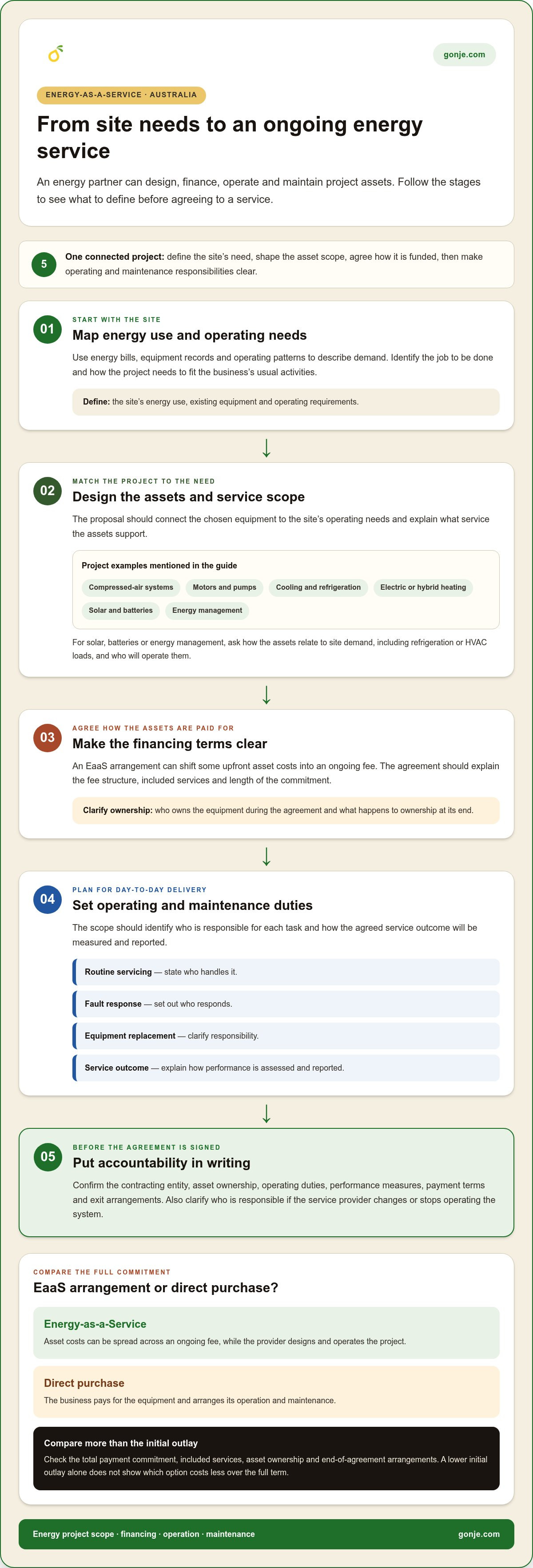
Provider continuity matters because energy equipment can serve a site for years. Before signing, identify the contracting entity, who owns the assets, who maintains them and who is responsible if the service provider changes. Get operating duties, performance measures, payment terms and exit arrangements in writing. For example, clarify who handles maintenance if the original project partner stops operating the system. These details make responsibilities clear, beyond a company name or sales description.
Energy Companies and Plan Availability
Energy retailers sell electricity plans; EaaS providers arrange a service around a business site. Availability depends on the project, equipment and operating needs, not simply the retail plan offered at an address. Compare proposals with the same usage period and energy bills. Check which assets, maintenance tasks and service outcomes each fee covers. If a salesperson approaches a consumer about a new energy contract, the consumer has 10 business days to cancel it at no cost. That rule concerns the energy contract, not every EaaS agreement.
Provider Choice and State Differences
Choose a provider by matching its project scope to your site's energy use, then compare the written service, finance and operating terms before signing. Use bills and equipment records to describe demand, and clarify who designs, maintains and owns the system. EaaS differs by state through market conditions and project opportunities, rather than one uniform national offer. Western Australia's market is projected to grow at a CAGR of 9.4% from 2026 to 2035; Victoria's at 8.5%, and Queensland's at 8.3%. The Australian Capital Territory accounted for 2.4% of Australia's market in 2025.
▮Energy partner design, finance, operation and maintenance
An energy partner can manage a project from initial design through ongoing maintenance. For an Australian business, the agreement should state who handles each stage and how the service is paid for.
Design, Finance and Ongoing Service
The partner may design, deliver, operate and maintain the assets. For example, a project might replace a site's gas boiler with an electric or hybrid system. The proposal should link the chosen equipment to the business's operating needs, then explain who funds and maintains it. Look for clear responsibilities, not just an equipment list.
Start with the site and the job to be done. A partner may review energy use, existing equipment and operating patterns to shape the project. An upgrade to compressed-air equipment, for instance, needs a different design from a heating-system replacement. The proposal should explain which assets are included, what service they support and how they will operate alongside the business's usual activities.
Financing determines who pays for assets and when. An EaaS arrangement can shift some upfront asset costs into an ongoing fee. The contract should explain the fee structure, the services it covers and the length of the commitment. It should also state who owns the equipment during the agreement and at its end. These terms help a business compare a financed service with buying and managing equipment itself.
Set out operating and maintenance duties before work begins. A useful scope identifies who is responsible for each task, such as routine servicing, fault response and equipment replacement. It should also explain how the partner measures the agreed service outcome and reports performance. For a pump upgrade, for example, the agreement can specify who maintains the pump and how its operation is assessed. Clear terms make day-to-day responsibilities easier to manage.
Solar, Batteries and Energy Management
Solar and batteries can be part of an EaaS project, alongside energy management. The partner's design should explain how those assets relate to the site's demand. A battery may support demand response, while energy management can help coordinate when equipment uses or exports electricity. The proposal should state which assets and services are included and who operates them.
Consider the whole system, not a battery or solar panel in isolation. A business with refrigeration or HVAC may need demand management that considers those loads alongside generation and storage. The partner can explain how it manages electricity imports and exports from distributed energy resources. This makes the intended operation easier to understand before the business commits.
For a project built around Energy as a Service, compare the design, funding, operation and maintenance as one service scope. The clearest proposal connects each asset to a business need and assigns responsibility for its ongoing care.
▮Australian energy-as-a-service market size and forecast
Australia's energy-as-a-service market was valued at A$1.89 billion in 2025. It is forecast to reach A$4.39 billion by 2035, with projected growth of 8.80% from 2026 to 2035. These figures show a growing market, but they don't establish whether a particular site's project will stack up.
For businesses, the forecast provides context, not a project budget. Market growth may reflect more providers, a wider range of services or increased demand for efficiency projects. A food processor assessing refrigeration, for example, still needs to consider its own equipment, operating hours and energy use. The national forecast cannot determine whether a particular upgrade suits its site.
The efficiency and optimisation segment is projected to grow at a CAGR of 9.7% from 2026 to 2035. That points to a stronger market focus on using energy more effectively, not only adding generation assets. Projects could target process equipment, heating, cooling or demand management. For a business, the practical question is which part of its operation an agreement would address.
Market growth also has a financing dimension. A third-party arrangement can place project design and asset operation with an energy partner, while the business pays an ongoing fee. As providers develop their offerings, compare the service scope and contract terms, not just the market's headline size. A larger market does not make every proposal suitable for every site.
Australia's government measures relevant to the wider energy system include A$23 billion invested in November 2023 to upgrade the grid and enhance energy performance. Rewiring the Nation is an A$20 billion program to modernise the electricity grid and deliver new and upgraded transmission infrastructure. These are grid-focused programs, not rebates paid directly to a business for an EaaS project. Project agreements must also account for applicable electricity-market and network requirements.
Use the forecast as a starting point, then assess the project in three steps:
- Identify the site's energy-intensive equipment, such as refrigeration or compressed air.
- Define the service outcome the business needs, such as efficient operation or managed demand.
- Compare the proposed fee, included assets, ongoing duties and contract term.
These steps connect national market trends with a real operating decision. A business with high refrigeration demand might consider equipment upgrades and demand management. A site planning solar and batteries might instead focus on how generation, storage and electricity imports work together. Australia's projected market growth provides context; the equipment, service scope and financing terms determine whether a proposal fits the business.
▮Energy-as-a-Service definition and financing
Energy-as-a-Service changes what a business pays for. Rather than buying energy assets outright and managing them, a business can pay for an energy-service outcome. This shifts the focus from energy volume to optimisation. For example, a site might pay for an agreed heating service rather than funding all its heating equipment upfront.
That difference changes the commercial incentive. A conventional energy sale is tied to the units consumed. An EaaS model can reward better management of the equipment and energy used to deliver the service. For a business with energy-intensive refrigeration, a project might focus on keeping cooling equipment operating efficiently. The agreement needs to define the service outcome and how the parties will assess it.
Financing can also change when expenditure occurs. Solar panels and batteries may require upfront investment when purchased directly. Under an EaaS arrangement, the provider can spread those asset costs across an ongoing fee. This can leave business capital available for core priorities, while the fee covers an agreed energy-service outcome. Compare the full payment terms with the costs and responsibilities of owning the assets.
An arrangement may shift some energy-demand management responsibilities and risks from the business to the supplier, but that does not mean every risk disappears. The contract should distinguish what the supplier manages from what remains the business's responsibility. A business using heating, refrigeration and lighting, for example, needs to know which equipment and energy-management tasks the agreement covers.
Before comparing financing options, separate the proposal into these parts:
- Assets: Identify whether solar, batteries or other equipment are part of the project.
- Payment: Read how the ongoing fee is calculated and what service it covers.
- Outcome: Find the agreed energy service and how performance is measured.
- Responsibilities: Note which demand-management duties move to the supplier.
These details help distinguish an asset purchase from a service arrangement. With a direct purchase, the business funds the equipment and organises its operation. With EaaS, a supplier may finance the assets and provide the service for an ongoing fee. Compare the full commitment, not just the upfront amount or equipment list.
For example, a business considering solar and batteries can compare buying both assets with paying for an agreed energy service. A useful comparison includes the fee, the service outcome and who manages energy demand. This makes the financing model easier to assess against the business's cash priorities and day-to-day operations.
▮What services are included in Australian EaaS offerings, such as solar, batteries, and energy management?
An Australian EaaS project can combine equipment, energy management and an agreed service. Solar and batteries are options, but the scope can extend to heating, lighting, vehicle charging and mobility. A business should match each service to a practical site need. For example, a warehouse may consider lighting and vehicle charging, while a food site may focus on refrigeration.
Generation and storage can work alongside demand response. Batteries can help a business manage electricity use and support grid stability. Energy management can also coordinate distributed energy resources, including electricity imports and exports. The proposal should explain which assets and activities it covers. For example, clarify whether the service manages a battery alongside the site's electricity demand.
Equipment upgrades are another part of the mix. An EaaS project can upgrade industrial cooling and refrigeration to more efficient, lower-carbon technology. It can also target compressed-air systems, motors, pumps or process equipment. These projects address different loads: a refrigeration upgrade meets different operational needs from a pump modernisation. Define the equipment and intended service clearly.
Energy management can include optimising demand from heat pumps, pool pumps and HVAC. The aim is to coordinate when equipment uses energy, rather than treating every load separately. For example, a site with HVAC and refrigeration can assess how both systems contribute to its demand. Demand flexibility can also help coordinate distributed energy resources with changing site needs.
Possible service components include:
- Solar generation and battery storage.
- Demand response and coordination of imports or exports.
- Efficient cooling and commercial refrigeration upgrades.
- Heating, lighting, vehicle charging and mobility services.
- Demand optimisation for heat pumps, pool pumps and HVAC.
To shape a useful scope, first list the site's energy-intensive equipment. Then identify whether the priority is generation, storage, efficient operation or flexible demand. A business with industrial cooling may centre the project on refrigeration, while a site with vehicle charging may consider mobility and load management. The service should address a clearly identified operating need.
For a project that brings these elements together, explore energy service options and consider which equipment and energy tasks matter most at your site.
▮Gonje: Multicultural & Specialty Food Delivery
Gonje offers multicultural and specialty food delivery, ready-to-eat restaurant meals, everyday groceries and Software as a Service. These offerings support different business needs from an energy project, including food ordering, grocery supply and merchant operations.
For Australian businesses, Gonje may be relevant when sourcing diverse food or everyday groceries is part of serving customers or staff. Merchants can also explore its software service for operational needs. Gonje is not a substitute for an energy partner, solar project or energy-management agreement. Keep those decisions separate and choose each service for the job it serves.
If Gonje's food, grocery or software offerings suit your needs, visit Gonje online to learn more.
▮Put your next energy decision into motion
Next, turn your site's energy priorities into a clear brief. Note which equipment matters most, what service you need and how you want to fund it. This gives your business a practical starting point for discussing energy as a service in Australia while keeping day-to-day operations in view.
Gonje offers Energy as a Service alongside multicultural and specialty food delivery, ready-to-eat restaurant meals and Software as a Service. These offerings meet different needs, so choose the one that fits the task at hand. For an energy-related enquiry, bring your priorities and questions to the conversation.
Contact Gonje about energy services to take the next step. A considered start can help your business move towards an energy approach that fits its work and priorities.
▮Frequently Asked Questions
What is Energy-as-a-Service?
Energy-as-a-Service is a model in which a business pays for an energy service rather than buying and managing every asset itself. Under an agreement, the service may cover equipment, operation and ongoing maintenance. For example, a business could contract for a heating outcome while a provider manages the equipment behind it. The contract sets out the service scope, payment terms and responsibilities for both parties.
What does energy as a service (EaaS) mean in Australia?
In Australia, energy as a service gives businesses another way to organise commercial energy projects and services. It can bring together equipment such as solar, batteries or efficient cooling with energy management under one arrangement. At a site with refrigeration and HVAC, the service scope can address both loads. Its value depends on how well the terms fit the site's operating needs and energy priorities.
Which Australian energy as a service providers and plans are available?
Gonje offers Energy as a Service for commercial energy management and efficiency. Providers' services and agreement structures vary, so compare the actual project scope rather than relying on a plan label. Consider which equipment and energy tasks are covered, who operates them, how the service is measured and how payment works. A business with solar already installed, for example, may need a different scope from one planning a new system.
How much does energy as a service cost in Australia, and what are typical fees or savings?
There is no single cost or saving that applies to every Australian EaaS project. The fee depends on the assets included, the service provided, the financing structure and the agreement's duration. Site demand and the equipment being upgraded also affect project economics. To compare an offer with buying equipment, consider all payments and operating responsibilities across the agreement, not only the initial outlay.
How do EaaS contracts, ownership, and payment models work in Australia?
An EaaS contract sets out the service, fee, asset responsibilities and agreement term. Ownership depends on the arrangement, so the contract should state who owns each asset during the term and what happens at the end. For example, a business considering a battery should understand who operates and maintains it. Payment may take the form of an ongoing service fee rather than an upfront equipment purchase.
What are the benefits and drawbacks of EaaS compared with buying solar panels and batteries outright?
EaaS can reduce upfront asset spending and shift some operating and demand-management duties to a supplier. Buying solar panels and batteries outright gives the business direct ownership, but it must fund and manage the assets. Compare ongoing fees and contract commitments with the purchase cost and responsibilities of ownership. A business with available capital and in-house energy expertise may weigh these trade-offs differently from one prioritising capital for core operations.
What risks, contract terms, and exit fees should customers check before signing an EaaS agreement?
Read the clauses covering service performance, fees, maintenance, asset ownership, contract duration and early exit. Check what happens if equipment fails, the business's operating needs change, or the agreement ends early. The contract should identify each party's duties and explain any exit charges and how they are calculated. For instance, confirm whether removing or transferring equipment creates additional obligations. Clear written terms can help prevent surprises later.
What Australian government rebates, incentives, and regulations apply to energy as a service?
The A$23 billion grid upgrade investment and A$20 billion Rewiring the Nation program support grid infrastructure; they are not direct business rebates for EaaS projects.
Asian Grocery in Australia: A Practical Guide
October 13, 2026

What if the easiest way to shop an asian grocery was to start with the dish, not the country? The term covers a wide range of food traditions, from East and Southeast Asia to South Asia. If unfamiliar names and packets leave you unsure what belongs in your basket, a recipe can give you a useful place to start.
You don't need to know every ingredient before you begin. Think about what you want to cook, then look for the ingredients that provide its flavour, texture and substance. Sorting products by their role in a meal makes unfamiliar shelves easier to navigate.
This guide explains how staples, sauces, grains, noodles, fresh produce and frozen foods fit into everyday cooking, with practical tips for choosing and storing them. You'll also find ways to explore specialty groceries online in Australia. Start with a familiar meal, try one new ingredient at a time, and build your pantry around the food you enjoy.
Key Takeaways
- An asian grocery brings together ingredients from many Asian regions and food traditions, not one uniform cuisine.
- Sort pantry ingredients by their role in a meal to see how they can support the dish you want to make.
- Start with your recipe, then compare product details and preparation directions before choosing an ingredient.
- Organise your pantry in a way that makes ingredients easy to find, and follow each product's packaging for storage and preparation.
- Online grocery browsing in Australia can help you explore multicultural specialty foods and compare product details.
▮ What does Asian grocery mean in Australia?
An Asian grocery is a broad shopping category for foods and ingredients connected with diverse Asian regions and communities, not one cuisine or a single way of cooking. In Australia, the term can cover products associated with East, Southeast, South and other parts of Asia. Ingredients, names and cooking traditions vary widely, so the category alone won't tell you how a particular product tastes or is used.
It helps to distinguish three ideas. An Asian grocery is a category of food shopping. A cuisine describes cooking traditions shaped by a particular place or community. A dish is a specific recipe, such as a noodle soup or a rice-based meal, which may draw on a particular tradition. The terms overlap, but they aren't interchangeable. One dish can't represent a whole cuisine, and one cuisine can't represent all Asian food.
For a closer look at one shopping trip, watch this market tour from Souped Up Recipes. It focuses on a Chinese grocery shop, one example within a much wider category.
Why Asian grocery is an umbrella term
What you find on a shelf reflects the products a retailer carries and the food traditions it serves. Cooking practices also differ between regions, countries, families and cultural groups. Broad labels such as "East Asian" or "South Asian" can help orient you, but they don't explain exactly how an ingredient tastes or is used. Check the ingredient's name and product description, then match them to the recipe you have in mind. That's more useful than assuming one familiar cuisine represents the whole shelf.
What shoppers may find in an Asian grocery
Products span several everyday food categories. These examples show the different roles ingredients can play:
- Staples: rice and noodles can form the base of a meal or add substance to soups and stir-fries.
- Seasonings: soy sauce is one example of an ingredient used to season food. Sauces and pastes vary in flavour and use.
- Fresh foods: vegetables, herbs and tofu can add texture, freshness or protein to a dish.
- Chilled and frozen foods: these include ingredients kept cold before cooking or serving. Follow each item's label for handling and preparation guidance.
The category makes more sense when you think of ingredients by what they do, rather than as one long list of unfamiliar names. A product label can help you understand what an item contains and how it might fit into a meal. Start with a dish, then explore its ingredients one at a time.
▮ Asian grocery ingredients: understand the pantry by how you cook
Unfamiliar shelves are easier to navigate when you consider what each ingredient does in a meal. Some foods provide the base, some season the dish, and others add texture or a distinctive tang. Thinking in these roles is more useful than treating every packet as a separate puzzle.
Ingredient roles turn an unfamiliar pantry into a practical map: start with the part of the meal you want to build, then choose ingredients that suit the recipe. Products within the same broad category can have very different flavours and uses, so don't assume one can replace another.
- Build the meal: choose a grain, noodles or another filling component that fits the dish.
- Shape the flavour: use seasonings to add saltiness, savouriness, aroma or depth.
- Add character: preserved foods can bring a sharp, tangy or fermented note, as well as texture.
Staples for building a meal
Rice, noodles and tofu are useful examples, but each comes in different forms and suits different preparations. Rice can be the centre of a meal or accompany other dishes. Noodles vary in shape and composition, which affects how they cook and work in a recipe. Tofu ranges from soft to firm and can take on the flavour of the foods it's cooked with.
Begin with a meal you already enjoy. Check the recipe for the type of rice, noodle or tofu it calls for instead of assuming one variety will suit every dish. A familiar recipe gives each purchase a clear purpose and helps you learn how a new ingredient behaves in your kitchen.
Seasonings, pastes and preserved ingredients
Seasonings do different jobs. Soy sauce brings saltiness and savoury flavour. Miso, a fermented paste, can add savoury depth to soups, dressings and other recipes. Other fermented seasonings have their own tastes and uses, so follow the recipe rather than treating them as interchangeable.
Kimchi is a distinctive fermented food, often recognised for its tangy, savoury flavour and crisp texture. It can be served as an accompaniment or used in a dish that calls for it. Its place in a meal depends on the food tradition and recipe.
Before choosing, identify what the recipe needs: a seasoning to blend into a sauce, a paste to add depth, or a preserved food to serve alongside the main dish. To explore ingredients for your next meal, browse multicultural specialty foods through Gonje and connect your pantry discovery to a recipe you're keen to try.
▮ How to choose Asian grocery ingredients for a recipe
Start with the meal you want to make, not the unfamiliar packet on the shelf. A recipe gives each ingredient a job, whether it adds savoury depth, holds its shape during cooking or brings a particular texture. Use that purpose to guide your choices, especially when several products look similar.
Choose ingredients for the dish, not unfamiliar packaging alone. This rule makes an asian grocery easier to shop, whether you're following a recipe closely or adapting a familiar meal.
- Start with the dish. Decide what you're cooking and find a recipe that describes its ingredients clearly. Note the method too. A sauce added during cooking may play a different role from one served at the table.
- Identify the key ingredients. Separate the essentials from optional garnishes or additions. Pay attention to whether an ingredient is fresh, dried, fermented or prepared, as its form can affect how it's used.
- Compare the options. Read product names and ingredient lists, then check preparation directions and storage guidance. If you have dietary needs, use the label information to help assess whether the product suits you.
Read labels and match ingredients to the dish
Compare the product name with its ingredient list and directions. Similar-looking jars or packets can contain different ingredients or be intended for different cooking tasks. A product used as a cooking base, for example, may not work like a finishing sauce. Check what the recipe asks for and how the label says to prepare the product. For dietary needs, rely on the information printed on the packaging.
Labels can help you choose between unfamiliar options. Look for a name that matches the recipe, then confirm the ingredients and intended use. Follow any preparation instructions rather than guessing from appearance alone. Keep the recipe nearby as you compare.
When and how to use substitutions
Before swapping an ingredient, ask what it contributes. Does the recipe need saltiness, acidity, heat, thickness or a particular texture? A substitute may provide one of these qualities but not another. A different seasoning could change the flavour balance, while an ingredient with a different texture may alter the finished dish. Similar names or colours don't guarantee the same result.
If you're adapting a familiar recipe, change one ingredient at a time and taste as you go. Keep the other ingredients close to the original so you can notice what the substitution changes. For a new recipe, following the listed ingredients is the clearest way to understand the intended result. As you explore, discover multicultural specialty foods and use recipe details to guide what you try next.

▮ How to store and use Asian grocery staples at home
A little pantry organisation can make new ingredients easier to find and use. Keep general organisation separate from storage rules: grouping products helps you locate them, but the packaging tells you how each item should be stored and prepared. Don't assume foods with similar packaging or names need the same handling.
Organise pantry staples for everyday cooking
Group dry goods by how you use them, such as grains, noodles, seasonings and preserved ingredients. Keep labels facing out, especially on products you're still learning. This makes it quicker to check a product's name and directions before cooking. If you move an item from its original packaging, retain its label information so you can still refer to the instructions.
Use the package as your guide for storage, including what to do after opening. Some items need different care once opened, while chilled or frozen foods have their own handling directions. Don't rely on a general shelf-life guess. Check the individual label and follow its preparation guidance. Pantry organisation makes items easier to manage, but it doesn't replace product-specific instructions.
Make unfamiliar ingredients easier to use
Keep your first try manageable. Choose a familiar dish and add one new ingredient, following the recipe and the product's directions. Changing one thing at a time makes it easier to notice the ingredient's flavour and texture. A short note on the packet or in a recipe book can help you remember how it worked in your kitchen and what you might pair it with next time.
Build from there at your own pace. If an ingredient needs special preparation, read the packaging before you start cooking rather than trying to work it out halfway through the recipe. For broader guidance on finding specialty foods and understanding delivery, explore speciality food delivery in Australia. If you're comparing ways to source ingredients, this guide to ethnic grocery delivery in Australia offers another useful perspective.
Once you know what suits your kitchen, discovering more multicultural ingredients can become part of your routine. Explore specialty food delivery with Gonje to discover diverse foods from local suppliers through delivery across Australia.
▮ Finding Asian groceries online across Australia
Online grocery browsing makes it easier to explore multicultural specialty foods from home. Search by ingredient, food category or the kind of meal you're planning. Product descriptions and labels can help you understand what an item is and how it might fit your cooking. Use the details provided to compare ingredients and choose what suits your recipe.
Before adding an unfamiliar product to your basket, match its description to your recipe and look for the information you'll need to use and store it properly.
What to look for when browsing an online grocery range
Start with the dish or pantry need, then read the product description and ingredient details. A category can help you navigate an online Asian grocery range, but it doesn't tell the whole story. Compare the item information with your recipe, especially if the ingredient has a specific role or preparation method.
| What to compare | What to look for |
|---|---|
| Product description | The ingredient's name and form, such as dried, preserved or ready to prepare. |
| Cooking use | Whether it suits the recipe's method or the role you need it to play. |
| Label details | The listed ingredients and any information relevant to your dietary needs. |
| Storage guidance | Packaging instructions for storing the item and preparing it at home. |
This comparison keeps the decision practical. If a description doesn't explain how an ingredient is used, don't infer its purpose from a familiar-looking name or image. Use the available label details and compare them with your recipe.
A practical way to keep exploring
Choose a recipe or ingredient you already know, then look for one new item that could help you make it. This gives your browsing a clear purpose and helps you learn from each purchase. Note the product name and cooking use so you can build on what worked the next time you browse.
Online specialty shopping can connect everyday grocery browsing with a wider range of multicultural foods and local suppliers. Gonje connects Australian consumers with specialty foods, everyday groceries and restaurant meals through delivery, bringing food discovery into the routines of home cooking.
Start with a dish in mind and explore at your own pace. Explore multicultural groceries with Gonje to discover specialty foods online across Australia.
▮ Let your next meal spark a new idea
Let your next meal be a reason to keep exploring. Rather than filling your pantry with unfamiliar items all at once, choose one ingredient that interests you and find a place for it in a dish you already enjoy. A small experiment gives you room to notice what you like, what you'd use again and what deserves a regular spot on the shelf.
Keep a note of discoveries as you go. Record a flavour you enjoyed, a preparation tip from the packaging or a meal you'd like to make again. Over time, those notes can help turn curiosity into a collection of reliable kitchen favourites. There's no need to learn everything at once.
An asian grocery can be the start of an ongoing exploration, shaped by your household's tastes and the meals you look forward to cooking. Gonje's delivery platform serves customers across Australia, offering a practical way to keep discovering foods for your kitchen. Explore multicultural groceries with Gonje, and let your next meal lead you to something new.
Ready to cook something new?
Browse Asian groceries and everyday essentials on the marketplace.
▮ Frequently Asked Questions
What is an Asian grocery?
An Asian grocery is a broad food-shopping category covering ingredients and products connected with diverse Asian food traditions. It doesn't describe one cuisine or mean that every shop carries the same products. If you're looking for a particular ingredient, use the dish or recipe name to guide your search, then read the product description. That's more helpful than relying on a broad category label alone.
What are common ingredients to look for in an Asian grocery?
Common examples include rice, noodles, tofu, soy sauce, coconut milk, rice vinegar, sesame oil and dried seaweed. They serve different purposes: some form the base of a meal, while others add flavour, richness or texture. You may also come across pastes and preserved foods. Choose according to the recipe you plan to make, since a familiar ingredient can come in different forms and have different uses.
Can I use light soy sauce instead of dark soy sauce?
Sometimes, but the result may change. Light soy sauce is generally thinner and saltier, while dark soy sauce is often used to add deeper colour and a fuller flavour. A recipe may rely on one for a particular balance, so swapping can affect both taste and appearance. If you substitute, use the recipe as your guide and adjust cautiously rather than assuming the sauces are identical.
Is miso the same as soy sauce?
No. Miso is a thick fermented paste, while soy sauce is a liquid seasoning. They differ in texture, saltiness and how they blend into a dish, so they aren't direct substitutes. Miso can be stirred into a soup or dressing, while soy sauce is poured or measured into a recipe. Miso varieties can also differ in ingredients and flavour, so read the label before choosing.
How should I store Asian pantry ingredients after opening?
Follow the storage directions on each product's packaging, including any instructions that apply after opening. Don't assume every sauce, paste or dry ingredient belongs in the same place. Close the package securely, keep its label or instructions available, and use clean utensils when taking food from a container. If you transfer an ingredient, retain its name and storage guidance so you can refer to them later.
Can I find Asian groceries online in Australia?
Yes. Online grocery services in Australia make it possible to browse multicultural and specialty food categories from home. Search by an ingredient or the dish you're planning, then read the product information to see whether it suits your recipe. Product details can help you compare ingredients and choose what fits your cooking.
What should I check when buying unfamiliar grocery ingredients online?
Check the product name and description first, then read the listed ingredients and any preparation directions. Consider whether the product's form and stated use fit your recipe. If you have dietary needs, review the available label details carefully. Also look for storage guidance, especially for products that need particular handling after opening. Choose an ingredient when the information gives you a clear understanding of how to use it.
Authentic Ethnic Meals Delivered: A Buyer's Guide
October 9, 2026

What makes a meal feel true to its roots when it arrives at your door? Finding authentic ethnic meals delivered can be tricky when a cuisine is unfamiliar, dish descriptions are vague and you're not sure how the meal has been handled or how best to reheat it. A name alone doesn't tell you what's on the plate or whether it suits your tastes and table.
You don't need to know every ingredient or tradition before trying something new. A little context can help you choose with more confidence while leaving room for discovery. This guide explains how to read dish descriptions, consider a meal's culinary roots and weigh practical details such as freshness, handling and reheating.
You'll also find a straightforward way to match a dish to your preferences and everyday needs, whether you're ordering for yourself, family or work. Gonje connects Australians with ready-to-eat meals prepared by partner restaurants and culinary kitchens, so you can explore diverse cuisines without shopping for ingredients or cooking. Start with the food's story, then choose what feels right for your table.
Key Takeaways
- Look for a dish's name, cuisine or regional context, ingredients and preparation details to understand what you're ordering.
- Think of authenticity as a connection to culinary traditions, not a score determined by one ingredient.
- Compare meal options by occasion, format and flavour, and distinguish ready-to-eat dishes from meals intended for later.
- Before ordering, review portion information, ingredients, dietary labels and any handling or reheating directions.
- Discover authentic ethnic meals delivered through Gonje, which connects customers with ready-to-eat meals prepared by partner restaurants and culinary kitchens.
▮ Authentic ethnic meals delivered: why a meal can feel like more than dinner
A ready-to-eat meal can bring comfort at the end of a full day or introduce you to a flavour you haven't tried before. Having dinner delivered means less time spent shopping, prepping and cooking. You can spend that time with the people around your table or simply take a breather.
The phrase authentic ethnic meals delivered can describe dishes connected to particular culinary traditions and food cultures. It doesn't mean there's one official version of every dish. Recipes vary between regions and households, and cooks draw on their own experience, ingredients and preparation methods.
A cuisine label is a starting point, not the whole story. A regional reference can add context, while a dish description may offer clues about ingredients or technique. Those details help you understand what you're choosing without suggesting that one restaurant or recipe speaks for everyone.
A cuisine label names a broad tradition; cultural context helps explain the people, place and cooking knowledge behind a dish. That distinction makes discovery more useful and respectful. Follow your curiosity while recognising that food traditions are varied and living.
What makes a delivered meal feel connected to its culinary roots?
Start with the description. A clear dish name, ingredient details and an explanation of how it's prepared give you more to work with than a broad cuisine label alone. If a listing mentions a region, treat it as helpful context, not proof that there's one definitive recipe.
Meals reflect the choices of the people who make them. A cook's training, family influences, restaurant kitchen and access to ingredients can all shape a dish. Look for descriptions that explain the food plainly and give the people and tradition behind it room to be more than a marketing phrase.
When does a ready-to-eat cultural meal suit the day?
It might be a weeknight when cooking feels like one task too many, a work lunch between meetings or a shared table where everyone is keen to try something different. Ready-to-eat restaurant meals make room for variety without requiring you to shop for unfamiliar ingredients or learn a new preparation method first.
Cooking from scratch can be rewarding, but it takes time to plan, shop and prepare. A prepared meal offers a different kind of ease: choose what suits the occasion, then follow the meal's handling and reheating directions. Consider who's eating, how much time you have and what would make the meal feel right today.
▮ How to read cuisine and dish descriptions with cultural care
A menu description is a useful starting point, not a complete account of a cuisine. When looking for authentic ethnic meals delivered, choose listings with information that helps you understand the dish without treating one recipe, ingredient or label as the final word on a food tradition.
Use this quick checklist as you browse:
- Dish name: Is a specific dish named, rather than described only by a broad cuisine label?
- Cuisine or regional context: Does the listing offer a useful cultural or geographic reference?
- Ingredients: Can you see what the meal contains, especially if you're considering unfamiliar flavours or have dietary needs?
- Preparation: Does the description explain how the dish is cooked or put together?
These details help you make an informed choice, but they don't let you award a dish an authenticity score. A single ingredient can't prove whether a meal is "real" or "traditional". Ingredients and recipes vary with region, household, cook and circumstance. Traditions also change as people carry them into new kitchens and adapt to the ingredients around them.
Broad labels can make browsing easier, but they shouldn't flatten distinct food cultures into one category. Asian cuisine covers many different traditions. Indian cuisine and Pakistani cuisine have their own varied regional and family foodways; neither should stand in for the other. Treat each label as a signpost, then read the dish details for a clearer sense of what's being offered.
Which details help explain a dish before you order?
Notice the named dish, key ingredients and stated preparation method. If a menu uses an unfamiliar term, a short explanation can help you understand its role without turning the description into a glossary. Separate practical facts, such as listed ingredients or cooking methods, from flavour language like "rich", "bright" or "comforting". The first tells you what's in the meal; the second suggests how it may feel to eat.
How can you explore unfamiliar cuisines respectfully?
Approach a dish as an invitation, not a test of what you know. You don't need to recognise every term before ordering. Read the description with curiosity, allow for variation between cooks and households, and avoid expecting one meal to represent an entire culture. That makes discovery more enjoyable and keeps the people and knowledge behind the food in view.
Context turns a cuisine label into a more useful description by showing what the dish is and how it fits within a broader food tradition. Keep that in mind as you compare meals. Gonje connects customers with dishes prepared by partner restaurants and culinary kitchens. Explore restaurant meals to see what's on offer.
▮ Compare delivered meal options by flavour, format and occasion
The right meal depends on more than its cuisine label. Think about when you'll eat, whether you're ordering for yourself or sharing, and what kind of flavour sounds good today. Then compare the details in each listing. Cuisine examples can spark curiosity, but check the specific meal description to understand what's being offered.
Use this guide to weigh up options. Treat format and storage as details to verify in the listing, not assumptions.
| Occasion | Meal format | Flavour profile to consider | Useful menu details |
|---|---|---|---|
| Lunch break | A single ready-to-eat meal, if described that way | Familiar or mild flavours may suit a quick, easy lunch; a tangy or spice-forward profile might be just the change you want. | Check portion information, ingredients and whether the meal is ready to eat or needs reheating. |
| Family dinner | A meal or combination intended for sharing, where the listing says so | Consider the different preferences at your table, rather than assuming everyone wants the same level of spice. | Look for serving details, listed components and dietary information for each item. |
| Planned meal for later | An option described as suitable for later, chilled or frozen | Choose by the flavours you enjoy, then check how the meal should be stored and prepared. | Use the listing and packaging directions for storage, timing and reheating. Don't infer these from the cuisine or dish name. |
These are prompts for comparing listings, not fixed rules. A cuisine you're curious about, such as one from South Asia or another part of the world, can be a starting point for exploring flavour descriptions. Focus on the words used for the particular meal rather than expecting every dish in a cuisine to taste alike.
Which meal format fits your routine?
A single ready-to-eat meal may suit a short lunch break or a night when you want dinner without cooking. For a family dinner or shared table, look for listings that clearly describe portions or items intended to be shared. If you're planning ahead, choose a meal described as suitable for later. Storage and reheating directions vary by meal and packaging, so follow the details provided.
How do flavour and dietary preferences guide the choice?
Start with the flavour words that appeal to you: familiar, mild, rich, tangy or spice-forward. Preferences differ from person to person, and a cuisine name alone won't tell you how hot or rich a specific dish will be. Check listed ingredients and dietary labels for practical details. Don't assume a dish contains or avoids an ingredient based only on its name or cultural origin.
Comparing authentic ethnic meals delivered this way helps you balance curiosity with the needs of the day. Choose the occasion first, then match the meal format and stated details to your table.

▮ A practical checklist for choosing and ordering a delivered meal
A little structure can make browsing easier, especially when you're choosing for more than one person. Take the decision in order: start with the occasion, narrow down the options, read the meal details, then review your order before completing it. This helps you choose for the day you're having, not just for a dish name that catches your eye.
- Choose the occasion. Is this a quick lunch, dinner for yourself or a shared meal? Think about when you'll eat and how much time you'll have.
- Browse with a starting point. Try a cuisine, a dish name or a flavour you enjoy. If you're also exploring specialty ingredients for your pantry, the speciality food delivery buying guide offers related context.
- Compare the listing details. Read the dish description, portion information, ingredients and any dietary labels. Look for stated serving, storage or reheating directions.
- Review the order. Check that you've selected the meals and quantities you intended. Read the delivery details and meal information shown on the selected listing so you know what to expect.
What should you check on a meal listing?
Give the practical details a careful read. A dish name and description help you understand what's being offered; ingredients and portion information help you judge whether it suits the people eating. Dietary labels can guide your choice, but don't infer allergen status or suitability from a dish name alone. Follow any storage, reheating or serving directions provided for that meal.
How can you make ordering fit the household?
Match the quantity and format to the occasion and the people at the table. For a low-pressure introduction to an unfamiliar cuisine, pair a familiar favourite with one new dish. That gives everyone a comfortable option and something different to try. Gonje connects customers with meals prepared by partner restaurants and culinary kitchens, so you can choose an option that fits your plans.
Before you place the order, pause over the details that matter most to your household. One person may be looking for a mild flavour, while another wants to try something more spice-forward. Clear ingredients, dietary information and portion details can help you make a considered choice without guessing from broad cuisine labels.
Put the checklist into practice with partner restaurant meals on Gonje.
▮ Discover authentic ethnic meals delivered through Gonje
Gonje connects customers across Australia with ready-to-eat meals prepared by partner restaurants and culinary kitchens. It brings different food businesses and their cooking together in one place, making it easier to discover meals beyond your usual rotation. The people preparing the food remain central: you're choosing a restaurant meal, not an anonymous dish assigned to a broad cuisine label.
Think of Gonje as a practical way to make cultural variety part of an ordinary lunch or dinner. Browse restaurant meal listings, read the descriptions, compare the details that matter to you, then choose a meal for home or work. You don't need to know every dish or culinary tradition before you start. Follow your appetite and use the information provided to decide what suits the day.
How Gonje connects diners with diverse restaurant meals
Start with the meal you need, then explore partner restaurant options and their descriptions. Each listing connects you with food prepared by a restaurant or culinary kitchen, so there's a business and cooks behind the meal. Read the available details, make your selection and place your order through Gonje. If you're looking for ingredients to cook at home instead, Gonje also offers multicultural and specialty food delivery for pantry staples and ingredients.
The marketplace brings together different cuisines and food suppliers without asking one menu to represent them all. When exploring authentic ethnic meals delivered, a clear description helps you choose a particular restaurant meal, while the range of food businesses creates opportunities to discover something new over time. Each meal stands on its own, shaped by the kitchen that prepares it.
Turn discovery into an easy next meal
Keep the choice grounded in your plans. Is this for a quick lunch, a quiet dinner or a table shared with others? Consider the flavour details and ingredients that matter to you, then choose a listing that fits. You might pair a familiar preference with an unfamiliar dish or stick with something you already know you enjoy. There's no test to pass and no need to explore everything at once.
A good next meal doesn't need a special occasion. It can be a straightforward way to bring a different cuisine into a busy day, with the restaurant kitchen doing the preparation. Check the listing details, choose what suits your table and let curiosity guide the rest.
▮ Let your next meal open a new door
A meal can be a small beginning. One new flavour might spark a conversation, bring back a memory or lead you to a food tradition you'd like to learn more about. There's no need to make every choice a grand discovery. Let curiosity grow at its own pace, and leave room for the cooks and cultures behind each dish to speak for themselves.
Choosing authentic ethnic meals delivered can be part of a more thoughtful everyday routine, not just a special occasion. Notice what you enjoy, stay open to flavours outside your usual habits and let each meal shape what you might try next. Your tastes are personal, and they can change as you discover more.
Pick a dish that feels right for today's table, whether it's familiar or something new. Explore authentic meals on Gonje, and enjoy finding a new favourite one meal at a time.
Ready to find your next favourite?
Explore authentic meals from local kitchens, delivered to your door.
▮ Frequently Asked Questions
Can I order authentic ethnic meals delivered for lunch as well as dinner?
Yes, ready-to-eat restaurant meals can suit lunch or dinner, depending on the dish and its serving details. For a workday lunch, consider how much time you have to eat and whether the listed portion suits your appetite. Check the meal information for serving guidance. A dish described as dinner can still work at lunchtime if it fits your schedule and preferences.
Are delivered ethnic meals fresh or frozen?
Handling varies by food business and meal, so don't assume every delivered dish is fresh, frozen or stored the same way. Gonje connects customers with ready-to-eat meals from partner restaurants and culinary kitchens. Check the chosen meal's listing and any directions supplied with it. Follow its specific storage and reheating guidance rather than applying instructions from another dish to your order.
How can I tell whether a meal is suitable for my dietary needs?
Use the ingredients and dietary information stated for that meal as your starting point. A cuisine label or familiar dish name can't establish whether food suits an allergy, intolerance or dietary preference. Read any preparation or handling notes too. If a requirement is critical, don't rely on a guess or an omitted detail; choose based on clear information provided for the meal.
What should I look for when ordering a dish from an unfamiliar cuisine?
Look for the dish name, ingredients and any notes about preparation or regional context. These details give you a better idea of what you're ordering than a broad cuisine label alone. Flavour descriptions can help you decide whether a meal sounds appealing, too. You don't need specialist knowledge to try something new. Stay curious, and remember that dishes vary between cooks and households.
Can I order meals for more than one person?
Yes. Choose quantities and meal formats with the people eating and the occasion in mind. Check the listing for portion details or serving suggestions, and don't assume a single ready-to-eat meal is intended for sharing. If tastes differ around the table, a familiar choice alongside a new flavour can make it easier for everyone to find something they'll enjoy.
How should I store and reheat delivered meals?
Follow the storage and reheating directions on the meal listing or supplied with the order. Instructions can differ according to the dish, packaging and how it was prepared, so avoid using one meal's directions for another. Check the guidance before storing or heating the food, and observe any stated timeframe. Appearance alone isn't a reliable way to decide how a meal should be handled.
Does authentic ethnic food mean one fixed recipe?
No. Food traditions include regional, family and individual variations, and a dish's name may describe different preparations. Cooks make choices shaped by their knowledge, ingredients and kitchen practices. Treat a listing as a description of the meal on offer, not a standard that every version must match. Cultural context gives you a more respectful way to understand a dish than a pass-or-fail judgement of authenticity.
Authentic Family Meals Delivery Australia | Gonje
October 12, 2026

A shared dinner doesn't have to begin with a chopping board. On busy evenings, finding time to cook from scratch can be hard, especially when everyone has different tastes or needs. Authentic family meals delivery can bring culturally familiar food to the table with less preparation, leaving more time to eat together.
Convenience doesn't have to mean settling for food that feels distant from your family's traditions. Gonje connects Australian households with ready-to-eat meals prepared by partner restaurants and culinary kitchens. To find a good fit, consider what people enjoy, how they'll share the meal and any dietary needs to keep in mind.
This article explains what delivered family meals can offer and how to fit them into a busy routine without losing the meaning of a shared meal. Use the practical tips to balance preferences, cultural connection and ease, so dinner planning feels more manageable and the table still feels like yours.
Key Takeaways
- Use cultural familiarity as a guide, while remembering no single meal represents an entire community or cuisine.
- Compare meal options with your household's tastes, mealtime plans and serving needs in mind.
- Make authentic family meals delivery easier to plan by matching meal choices to the occasion and the people sharing them.
- A simple routine can help fit prepared meals around a full workday or an evening when cooking feels difficult.
- Gonje connects households with ready-to-eat meals prepared by partner restaurants and culinary kitchens.
▮ What authentic family meals delivery can bring to the dinner table
It's late, everyone's hungry and the evening is already full. Between work, school pick-ups and jobs waiting at home, making dinner from scratch can feel like one task too many. Families may still want a meal that feels familiar and gives everyone a reason to sit down together.
Authentic family meals delivery brings prepared food into the household that reflects food traditions and the preferences of the people eating. It combines practical help with a sense of connection. A meal doesn't need to recreate every detail of a family recipe to feel meaningful. A familiar flavour, ingredient or way of preparing food may be enough to bring memories and conversation to the table.
Food carries more than flavour. It can hold family routines, shared histories and ties to a wider community. The concept of food culture helps explain how eating is woven into identity, traditions and social life. That connection is personal, not a checklist every household must follow.
Convenience can bring dinner to the table; the meaning comes from the people who gather around it.
What does authentic food mean to a family?
One family may recognise a dish by its taste; another may care most about its ingredients or preparation. Someone else may value the way it recalls meals shared with relatives. These perspectives can differ within the same household, too. No cuisine has just one fixed recipe, and no single meal speaks for everyone in a community. Familiar flavours can still offer a comforting link to home, even when the meal arrives ready to eat.
Where delivered meals fit into family life
Prepared meals can be useful after a full workday, during an unsettled week or on an evening when cooking simply isn't manageable. They can leave more room to set the table, catch up and share the meal, rather than having one person spend the evening preparing it. The aim isn't to make every dinner effortless. It's to have another practical option for evenings when time and energy are stretched.
Start with the occasion and what would help your household feel at ease. A meal chosen for a shared evening may differ from one picked to suit several schedules. Notice what familiar flavours mean to your family, and allow room for different preferences around the table. For ideas beyond familiar choices, explore this guide to authentic ethnic meals delivered. It offers a starting point for discovering meals that may bring a new kind of cultural connection to family dinner.
▮ How cultural connection shapes an authentic family meal
A meal can feel culturally familiar for reasons that aren't obvious from its name or appearance. Its taste may recall a relative's cooking, or its aroma may bring back a particular kitchen. The way people gather, serve food or make time for one another can shape what dinner means, too. Authenticity grows from these lived connections, not from a label alone.
That's why cultural inspiration should be described with care. A recipe or meal may draw on a tradition, but it shouldn't be presented as the one true version for an entire community. Food changes across households, generations and personal experience. Respectful descriptions leave room for that variety and let families decide what feels familiar to them.
Cultural authenticity isn't a checklist; it's the meaning people bring to food through memory, tradition and everyday life.
Tradition, taste and personal familiarity
Family recipes often carry small details that matter: a particular seasoning, a way of preparing an ingredient or the way a dish is served. Those details can become part of a person's sense of home. But expectations aren't universal. An older relative may prefer the tastes they grew up with, while younger family members may welcome changes or new influences.
A familiar aroma or flavour can make a meal feel recognisable before anyone takes a seat. Someone else may connect through a shared ritual, such as serving food family-style or lingering at the table. These are personal responses, not proof that one version is more authentic than another.
Make room for different family preferences
One shared dinner doesn't require everyone to want the same thing. A family might choose a familiar meal for some, while leaving space for others to try something new. Before ordering, have a quick conversation about what sounds appealing, what feels comfortably familiar and whether anyone has a preference that should guide the choice.
That check-in can prevent assumptions from shaping the whole meal. Ask each person what they're in the mood for, then look for common ground. Preferences can change from one evening to the next. A meal that suits a relaxed family catch-up may not be right for a night when everyone's arriving home at different times.
With authentic family meals delivery, cultural connection can start with a simple question: what would make dinner feel welcoming to this household tonight? Gonje connects customers with prepared meals from partner restaurants and culinary kitchens, bringing culturally diverse food into family routines. Explore authentic ready-to-eat meals with your household's tastes and traditions in mind.
▮ What to consider when choosing family meals for delivery
A good fit isn't necessarily the meal with the broadest appeal or the most familiar name. It's one that suits the people eating, the kind of evening ahead and the practicalities of sharing dinner. A little thought before choosing can help avoid a meal that sounds appealing but doesn't fit the household's plans.
Use these questions as a guide, not a ranking. Every family has its own mix of traditions, tastes and routines, so there's no universal best cuisine. Read meal descriptions carefully, especially if ingredients matter to someone in your household. Don't rely on a dish name alone to tell you what's included.
| Household need | Question to consider | Why it matters |
|---|---|---|
| Cultural familiarity | Which flavours, ingredients or styles of preparation feel familiar to the people eating? | Recognisable details can help a delivered meal feel connected to family traditions. |
| Different preferences | Who will be eating, and what sounds appealing to each person? | A quick conversation can reveal shared favourites and avoid assuming everyone wants the same meal. |
| Mealtime plans | Will everyone sit down together, or will people eat at different times? | The occasion can guide what kind of meal will work for that evening. |
| Practical serving needs | How will the meal fit into the way your household serves dinner? | Thinking ahead can help you plan the table and serving approach without assuming a particular format or portion size. |
Match meals to household tastes and routines
Start with who's eating and how the evening is likely to unfold. If everyone expects to sit down together, choose with the group's shared tastes in mind. If schedules are staggered, consider what will suit the different mealtimes. Think about whether people want a familiar flavour, feel curious about something new or have different preferences to balance. Check the meal description for ingredients that matter at home.
Balance familiarity with discovery
Familiarity and discovery can sit side by side. If the household wants variety, pair a recognisable choice with something less familiar, rather than making the whole dinner feel like a leap. Trying something new should be an invitation, not a test of anyone's cultural openness. Let people opt in at their own pace. For more practical points to weigh up, this guide to traditional ready meals delivered can help frame your decision.
For authentic family meals delivery, use the table as a starting point, then make the final choice around your household's real needs. A meal that works for one family may not suit another, and preferences can shift from one occasion to the next. Keep the conversation simple: what feels familiar, what sounds appealing and what will fit tonight's plans?
▮ How to make delivered family meals work in everyday life
Delivered meals are most useful when they fit the household's actual week. A full workday, a late finish or a night when cooking feels like too much can all make a prepared meal practical. Planning ahead doesn't need to mean scheduling every dinner. It simply helps you decide which evenings could use a hand.
A little planning can take the rush out of dinner and leave more room for the people around the table.
- Plan the occasion. Look at the family calendar and pick an evening when a prepared meal would ease the load. It might be a busy weekday or a night with competing commitments. Keep the plan realistic. Delivery can support the routine without replacing cooking every day.
- Consider the household. Think about who'll be home and whether everyone will eat together or at different times. For a shared dinner, invite people to mention what sounds good. For staggered mealtimes, consider how the meal will fit the household's schedule.
- Choose meals with care. Use the household's preferences as a guide. A familiar choice may suit one occasion; another evening might be right for trying something different. Read the meal description for details that matter to your family, rather than making assumptions based on a name or broad cuisine label.
- Organise mealtime. Make space at the table and decide how you'll serve the meal. Follow the meal's own instructions for storage, serving and reheating. A small amount of preparation, such as setting out plates before everyone arrives, can help the evening feel more settled.
Plan around the family calendar
Choose the evenings that tend to feel most pressured, not every night by default. A workday that runs late may call for a different plan from an evening when everyone's home at once. Consider who'll be eating and when, then choose an occasion that makes sense for the household. Keeping delivery as one useful option, rather than a rule, leaves room for routines to change.
Bring everyone to the table
Ask family members what they'd enjoy before choosing a meal for a shared occasion. That quick conversation can help balance familiar preferences and curiosity about new flavours. No one needs to like everything for dinner to feel shared. Make room for people to talk about what they enjoyed, while keeping the focus on being together, not only on saving preparation time.
That's the everyday value of authentic family meals delivery: it can help make space for a culturally connected meal without asking one person to do all the preparation. Gonje connects households with ready-to-eat meals prepared by partner restaurants and culinary kitchens. Explore ready-to-eat meals for your family and bring another option into your dinner routine.
▮ How Gonje connects families with authentic ready-to-eat meals
Gonje connects households with authentic ready-to-eat meals prepared by partner restaurants and culinary kitchens. This brings culturally diverse meals into the family routine without asking someone at home to prepare dinner from scratch.
A marketplace brings together different meal makers, not one kitchen with one menu or one idea of what dinner should be. Meal makers bring their own food traditions and approaches. Families bring their own memories, expectations and preferences. Find a meal that feels relevant to your household and suits the evening ahead, rather than assuming every family wants the same thing.
From partner kitchens to the family table
Partner restaurants and culinary kitchens prepare the meals; Gonje connects them with customers. Families can explore culturally diverse ready-to-eat food while keeping the people behind the meal in view. A description can help you understand what a meal draws on, but cultural connection remains personal. One household may be looking for familiarity, while another may want to discover something new.
No single meal will suit every household or every dietary requirement. Use the information provided with each meal to make a considered choice for your family. The aim isn't to treat cultural food as a novelty or claim that one version represents everyone. It's to make room for different food traditions in everyday family life, with the household's own needs guiding what goes on the table.
Choose a next step that suits your household
Keep your decision grounded in three things: whether the meal feels culturally familiar or appealing, whether it suits the people who'll be eating, and whether it fits the evening's routine. A meal for a shared dinner may call for a different choice from one that needs to work around varied schedules. You don't need a perfect plan. A clear sense of what matters tonight is a useful start.
For authentic family meals delivery that brings partner meal makers and household routines together, Explore Gonje and see what could suit your family's table.
▮ Make room for a meal that feels like yours
Let the next shared dinner start with a small, useful question: what would help everyone feel welcome at the table tonight? One evening, that might mean choosing a familiar favourite. Another, it could mean making room for a new taste alongside something everyone knows. There's no single right way to bring cultural connection into a family meal.
Think of authentic family meals delivery as an option to shape around your household, not another routine to get perfect. Start with the evening ahead, the people who'll be eating and what would make the meal satisfying to share. Keep it simple. The value is in making space for dinner without asking one person to carry every part of it.
Ready for a shared dinner?
Explore family-friendly meals on the Gonje marketplace, with fast doorstep delivery.
▮ Frequently Asked Questions
Is authentic family meals delivery suitable for households with different tastes?
Yes, it can suit households with different tastes if you choose with those differences in mind. Ask everyone what they're comfortable eating, then look for a choice that works for the group or suits the person eating at that time. For example, if one family member prefers familiar food and another is curious, you could make the new choice an occasional change rather than the default. One meal doesn't need to please everyone every time.
Can delivered cultural meals feel like food made at home?
They can feel familiar, though they won't necessarily be identical to a dish made in your own kitchen. A taste, aroma or preparation style may remind someone of a family meal, while another person may notice differences. If you have a family recipe or memory in mind, treat it as a personal reference rather than a standard the delivered meal must match. Familiarity can be meaningful without requiring an exact copy.
How do I choose a delivered meal for the whole family?
Start with the people who'll be eating, then consider the occasion. For a birthday or relaxed catch-up, you might choose something the group already enjoys. For an ordinary weeknight, a simple, familiar option may make the decision easier. If tastes don't overlap neatly, consider whether everyone needs the same choice or whether people will eat separately. Let the meal description guide your decision, and don't assume a cuisine label guarantees a particular taste.
What should I check before ordering a family meal online?
Read the meal description closely before placing an order. Check the details provided about ingredients, preparation, serving and any storage or reheating instructions. If a specific ingredient matters to someone in your household, don't rely on a meal name or image to work out what's included. Think about who'll eat and when, too, so the meal suits the evening's plans. Keep your expectations tied to the information available for that particular meal.
Can a family try a new cuisine without changing everyone's dinner routine?
Yes. Keep the routine familiar and change only the meal. You might choose a new option for a night when everyone can sit down together, while keeping the usual time and table habits. Give family members room to try it without expecting them to enjoy every flavour. A small tasting alongside familiar food can make discovery feel relaxed, not like a test. New choices can happen occasionally, at a pace that suits your household.
Are delivered ready-to-eat meals the same as grocery delivery?
No. Ready-to-eat restaurant meals are prepared food intended for a meal, while grocery delivery is for household food and pantry items you choose to use at home. They serve different needs: a prepared meal can help on an evening when cooking is difficult, while groceries support your own meal planning and cooking. Gonje offers both types of delivery, so consider whether you need dinner ready to eat or ingredients for later.
Buy Japanese Ingredients Online in Australia | Gonje
October 4, 2026

What if the smartest Japanese pantry starts with tonight's dinner, not a long list of unfamiliar names? If you want to buy japanese ingredients online, begin with a dish you already enjoy. A few well-chosen staples can make miso soup, ramen or a simple rice bowl feel within reach, without filling your cupboards with ingredients you're unsure how to use.
Unfamiliar labels and package formats can make choosing harder. Is the ingredient suited to your recipe? Will you use the whole pack? These are practical questions, not fussy ones. Match each item to a dish, read the listing and check the format before adding it to your basket.
This guide will help you choose Japanese ingredients for familiar meals and everyday cooking, understand labels and formats, and plan a pantry order without unnecessary extras. You'll also see how online specialty grocery shopping can connect Australian households with hard-to-find international foods. Gonje brings shoppers together with specialty food suppliers, making it easier to explore international ingredients for the dishes you want to cook.
Key Takeaways
- Start with a Japanese dish you plan to cook, then choose ingredients for the roles that recipe needs.
- Read the full listing, including ingredients, storage directions and pack size, rather than relying on one familiar word.
- Compare options by cooking use and format to find what fits your recipe and pantry.
- Before you buy japanese ingredients online, check that every item has a planned use and review your basket for extras.
- Once you know what you need, explore Japanese and other specialty foods through Gonje's online ordering.
▮ Buy Japanese Ingredients Online by Starting with the Dishes You Want to Cook
Japanese ingredients include pantry goods and fresh foods used in Japanese cooking. They range from rice, noodles and seasonings to ingredients chosen for a particular recipe. For a useful overview of the traditional cuisine of Japan, remember that ingredients work together in dishes, not as isolated items on a shelf.
Decide what you want to cook before you browse. A recipe gives each ingredient a job: one may form the base, another adds flavour, and another completes the meal. Without that guide, unfamiliar names can quickly turn an online basket into a collection of items with no clear use.
A dish-first plan makes your online grocery order more useful. It helps you focus on ingredients for a meal you'll actually make, then leave room for new discoveries later.
Which Japanese pantry basics suit everyday cooking?
Think in broad categories rather than treating any one list as essential for every kitchen. Rice or noodles might provide the base for a meal. Seasonings and other cooking ingredients shape its flavour. The right combination depends on the dish and the recipe you're following.
For miso soup, start with the ingredients your chosen recipe calls for, then separate those core items from additions you might like to try. For a noodle bowl, identify the noodles and flavouring the recipe needs. Extras can wait until you know you'll use them. Staples earn their place through regular use; optional ingredients suit a specific variation or a future experiment.
How can a first-time shopper choose a starting dish?
Pick one recipe you already want to cook. It could be a simple soup, a noodle bowl or another familiar meal. Write down the ingredients the recipe requires, then mark which ones you already have. This gives you a short, purposeful list instead of a guess at what a Japanese pantry should contain.
Keep the first order focused. Put ingredients for that meal in one group, and tempting extras in another. If an unfamiliar name appears, read it in the context of the recipe: what role does it play, and is it needed for this dish? Names can feel less daunting when they're attached to a meal you understand. As you cook, you'll learn which ingredients suit your taste and routine.
When you're ready to buy japanese ingredients online, use your recipe as a guide while browsing specialty groceries. Gonje connects Australian shoppers with specialty food suppliers, offering a practical way to explore international ingredients for home cooking. Begin with the meal, identify what it needs, and build your basket from there.
▮ Choose Japanese Ingredients Online by Reading Labels and Understanding Formats
A familiar-sounding name is only a starting point. Japanese ingredient names may appear in Japanese, English or a translated form, and wording can vary between listings. Read the full product name and description before adding anything to your basket. The details help you judge whether an ingredient suits your recipe, how much you'll receive, and how to store or prepare it.
Check the ingredient list, pack size, storage directions and any preparation notes. These details can clarify what's inside and whether the quantity fits your cooking plans. Similar names don't guarantee the same taste, texture or cooking role. For broader guidance on understanding food labels, Healthdirect Australia explains how to read key label information.
What should you check on an online ingredient listing?
Read beyond the first word or product photograph. Compare the full name with the description, then look for ingredients and pack size. Storage instructions can tell you whether an item belongs in the pantry, fridge or another place after opening. Preparation notes may explain whether it needs soaking, dilution or another step. When a detail matters to your recipe, use the listing's wording rather than relying on assumptions.
A recipe may call for a particular kind of ingredient or use. Don't treat two listings as interchangeable just because their names look alike. Check what each description says about its contents and intended use.
How do Japanese ingredient formats affect your recipe?
Format can change how an ingredient fits into your cooking routine. Dried items may need preparation before use; a paste may be stirred or measured into a dish; a liquid may be added directly or used as a seasoning. A fresh format may need different storage from a shelf-stable one. These are general examples, not directions for every product.
Miso and soy sauce are familiar examples, but their names alone don't tell you everything about a specific listing. Check the described format, ingredients and storage directions. Follow product-specific preparation instructions where provided, as general cooking advice shouldn't replace them.
The recipe and product description together guide a suitable choice: the recipe tells you what role and format you need, while the listing helps you judge whether the item matches. That's a useful habit whenever you buy japanese ingredients online, especially when comparing unfamiliar names or package types.
Once you know what your recipe calls for, explore specialty groceries online through Gonje and browse with those label details in mind.
▮ Compare Japanese Ingredient Options by Recipe, Quantity, and Pantry Use
Once you know what you're planning to cook, compare ingredients by the job they need to do. A meal might need a grain for its base, a seasoning for flavour or a soup base. These are general cooking suggestions. BBC Good Food's introduction to Japanese flavours and techniques can also help you cook like a local as you plan.
Which ingredients belong in a Japanese meal plan?
Use the recipe to identify each role, then compare the relevant format and listing details. The table offers general examples. Use each product's description to guide your final choice.
| Cooking use | Format to look for | Listing detail to check |
|---|---|---|
| Rice-based meal, grain | A format specified by the listing | Product description, ingredients and storage guidance |
| Noodle bowl, main ingredient | Dried or chilled, if stated | Preparation directions and the quantity in the pack |
| Soup, base or seasoning | Paste, liquid or dried, as described | Ingredients, how to prepare it and storage after opening |
| Seasoning a cooked dish | Liquid or another stated format | Suggested use, ingredients and storage directions |
How much should you order for a first recipe?
Start with the recipe's stated quantities. Compare them with the pack size shown in the listing, then consider whether you'll use the ingredient again in meals you already make. If it has one specific role in a single recipe, a quantity closer to what you need may be more practical than buying extra. For an ingredient you expect to use regularly, a larger amount may suit your routine, provided the storage guidance works for your kitchen.
Check how the listing says to store an item, including any directions for after opening. Don't assume a pantry staple will stay suitable indefinitely, or that two formats can be stored the same way. Use the product's own guidance to decide whether the quantity makes sense for your meal plan.
Recipe fit matters more than having the widest range. A focused basket of ingredients matched to your dishes is more useful than a cupboard full of unfamiliar options. As you buy japanese ingredients online, compare each item by its role, the recipe quantity and the stated storage instructions.

▮ Use This Checklist Before You Order Japanese Ingredients Online
A few checks can turn a browsing session into a practical pantry order. Use this sequence before placing your order, especially if ingredient names or formats are new to you.
- Choose the meal. Name the dish you plan to cook and keep its recipe nearby. This gives each item in your order a clear purpose.
- Match each ingredient to the recipe. Check the full product name and description against the recipe's wording and intended cooking use. Don't rely on one familiar word if the rest of the listing describes a different ingredient or use.
- Check the quantity and format. Compare the listed amount with what the recipe calls for. Consider whether you'll use the ingredient again, and read the storage directions before choosing a format.
- Review delivery and order details. At checkout, read the delivery information and order details displayed before you complete the purchase. Make sure the order suits your plans and kitchen routine.
- Review the whole basket. Remove duplicates and anything without a recipe, pantry need or planned use. A shorter list can be the better order.
What should you check before adding an item to your basket?
Pause on each listing. Confirm that the product name and stated use make sense for your recipe, then check the quantity and storage instructions. If the description doesn't match what the recipe calls for, don't add it just because the name looks familiar. Remove repeat items unless you have a clear reason to order more.
How can you make an online pantry order easier to manage?
Group items by the meal they'll support. That makes it easier to see whether an ingredient belongs to your planned dish or has a regular place in your pantry. After ordering, keep a short note of what to use first and follow each product's storage and preparation directions. For broader help comparing online grocery services, read our ethnic grocery delivery guide.
Before you buy japanese ingredients online, make one final pass through the basket: every item should have a purpose, a suitable quantity and clear storage guidance. Explore specialty groceries through Gonje for ingredients to bring into your home cooking.
▮ Find Japanese Ingredients Online Through Gonje for Your Next Home-Cooked Meal
A useful Japanese pantry order doesn't need to cover every dish. Choose one meal, identify the ingredients by their role, then compare product descriptions with what the recipe calls for. Check the format and quantity, read the storage guidance, and review your basket before placing the order. That simple approach keeps the focus on food you're ready to cook, rather than ingredients that may sit unused.
How does Gonje make specialty food shopping more convenient?
Gonje connects Australian shoppers with specialty food suppliers and supports online ordering of multicultural groceries, including hard-to-find international ingredients. You can browse specialty foods as part of planning an ordinary home-cooked meal. Start with a recipe, use its ingredient categories to guide your search, and compare listings with your cooking plans. That keeps the decision grounded in your kitchen routine.
For a wider view of what to consider when choosing where to shop, the 2026 specialty food delivery buying guide offers broader context for exploring specialty food delivery in Australia. Your recipe remains the best guide to what belongs in this particular order.
What is the simplest next step for a first order?
Pick one Japanese-inspired dish you'd like to make. Write down the ingredient categories it needs, such as a grain, seasoning or soup base, then note what you already have at home. Browse relevant specialty-food listings and compare each product description with the recipe. Pay attention to the stated format, quantity and storage directions so the item suits both the dish and your pantry.
Before checkout, look over the basket and the order details shown there. Keep items that match the meal or have a clear planned use. Leave out anything you've added only because the name is unfamiliar or the category sounds interesting. You can explore more ingredients as you cook and discover what you enjoy.
If you want to buy japanese ingredients online, let the meal lead the way: choose a dish, match ingredient roles, read listings and review the basket. Gonje brings specialty food suppliers together with Australian shoppers through online ordering, making it a practical place to explore foods for home cooking. Browse Gonje and plan your next Japanese-inspired meal at your own pace.
▮ Plan Your Next Japanese-Inspired Meal with Confidence
Start with a dish you're keen to cook. Identify the ingredients it needs, then use product descriptions, quantities and storage directions to choose what suits your recipe and pantry. When you buy japanese ingredients online, a focused list helps you make confident choices without adding extras you may not use.
Gonje connects Australian consumers with specialty food suppliers and offers online delivery of multicultural and specialty foods across Australia. Specialty foods, everyday groceries and restaurant meals come together on one platform, making it easier to explore food options alongside your usual kitchen shop.
Your next step can be simple: choose a meal, make a short ingredient list and browse with that plan in mind. Browse specialty foods on Gonje and plan your next meal. Take it one dish at a time, and let your pantry grow around the meals you enjoy making.
Ready to cook Japanese tonight?
Browse Japanese ingredients and pantry staples on the marketplace.
▮ Frequently Asked Questions
Where can I buy Japanese ingredients online in Australia?
You can explore Japanese and other specialty food options through online grocery platforms such as Gonje. Gonje connects Australian consumers with specialty food suppliers and offers online delivery of multicultural and specialty foods across Australia. Browse using the dish you plan to cook, then compare listing descriptions with your recipe.
What Japanese ingredients should I buy first?
Start with the ingredients required for one dish you already want to make. A recipe may call for a grain, noodles, seasonings or a soup base, but there's no single starter list that suits every kitchen. Check what you already have at home, then add only what the recipe needs. Once you've cooked with those ingredients, you'll have a better feel for what belongs in your regular pantry.
How do I know whether an online Japanese ingredient suits my recipe?
Compare the recipe with the full product listing, not just its name. Read the description, ingredients, format, quantity and storage directions. Check for preparation notes too, especially if the recipe calls for a specific type or form. Similar names don't always mean ingredients have the same taste, texture or use. If the listing's details don't match the recipe, choose an option that does.
Can I buy Japanese pantry staples and other groceries in one online order?
Gonje brings specialty foods, everyday groceries and ready-to-eat restaurant meals together on one platform, so you can explore these categories in one online shopping destination. To keep your order organised, separate the items you need for a recipe from your usual grocery list. Review the checkout details before placing your order so you understand which items are included and the delivery information shown.
How should I store Japanese ingredients after they arrive?
Follow the storage directions on each product's label or listing. Different formats may need different care, so don't assume every pantry ingredient belongs in the cupboard after opening. Check the instructions when unpacking, and make a note of any products that need to be used or stored a particular way. If the listing includes preparation directions, keep those with the ingredient until you're ready to cook.
Are Japanese ingredients the same as other Asian ingredients?
No. Japanese ingredients are used within the varied food traditions of Japan, while other Asian cuisines have their own ingredients, preparations and cooking uses. Some broad categories, such as rice, noodles or seasonings, appear across different cuisines, but that doesn't make every product interchangeable. Choose ingredients based on the dish and recipe you're making, and read the listing to understand the specific product's stated use.
How can I avoid buying too many unfamiliar Japanese ingredients?
Choose one recipe before you browse, then list only the ingredients it calls for. Check your pantry for items you already own, compare recipe quantities with listed pack amounts, and consider how often you'll use each ingredient again. Remove duplicates and anything without a clear planned use. This focused approach makes it easier to buy japanese ingredients online with confidence, without collecting extras just because their names are new to you.
Commercial food supply chain analytics for fresher stock
October 24, 2026

Freshness is shaped well before food reaches the shelf. Commercial food supply chain analytics brings together demand, stock, order and delivery information so food businesses can see what is selling, what may run short and where delays could affect quality. It turns scattered records into practical signals for planning orders and reducing avoidable waste.
That matters when a busy kitchen needs the right ingredients on hand or a grocer wants fresh stock without tying up space in slow-moving items. Data cannot prevent every disruption, but it can help teams spot patterns earlier and make clearer decisions.
This guide explains supply chain analytics and how it supports demand forecasting, inventory management, product traceability, food safety and quality. It also explores how businesses can use analytics to consider food loss, waste and sustainability goals. The focus is practical: how information moves through the supply chain and how it can help keep food fresher from supplier to customer.
Key Takeaways
- Bring supply, stock and delivery information into clear visual reports so teams can spot bottlenecks and make decisions from a shared picture.
- Use past sales patterns and current stock visibility to plan replenishment and reduce the risk of overstocking or running short.
- Connect product information across processing, packing, shipping and delivery to strengthen traceability and support food safety and quality.
- Match analytics tools to the task, from understanding past performance to forecasting demand and choosing practical responses.
- Track food loss and waste alongside operational measures to find where supply chain changes can support sustainability.
▮ What is supply chain analytics?
Supply chain analytics gathers and interprets information from across food operations to produce useful insights. In Australia, software may be priced through subscriptions, licences or tailored projects. Costs depend on the platform's scope, data connections and required functions.
For a quick overview of how food moves from farms to shops, watch this explanation of the supply chain:
Supply chain visualisation
Supply chain visualisation turns sourcing, stock, order and transport records into charts, maps or process views. A grocer might track a chilled product from supplier dispatch through storage to store delivery. This view shows where an order stands, where hand-offs occur and which stage needs attention. Clear reporting helps teams understand separate events as one connected flow.
Useful visualisation is more than a colourful dashboard. It brings together relevant measures, such as stock availability, delivery progress and order accuracy, so staff can compare activity across locations or time periods. A map can show delivery routes, while a trend chart can reveal recurring delays. The format should make decisions easier, not bury store teams in detail.
Analytics platforms and stakeholder collaboration
An analytics platform brings data from different supply chain systems together for analysis and reporting. Purchasing, warehouse and store teams, for example, can view the same order status instead of relying on separate spreadsheets. Shared visibility can reduce miscommunication and support decisions based on consistent information.
That shared view matters when a supplier reports a delay and a grocer needs to adjust stock plans. A buyer can see the affected order, while operations staff identify which locations depend on it. The platform can produce a report for both groups. People still make the decisions, but they work from the same information.
Good collaboration also depends on choosing measures that fit the question. A team investigating late deliveries needs order and transport details; a team reviewing stock needs inventory and sales records. Supply chain visualisation reports help decision-makers compare these signals and spot patterns. A perfect order rate, for instance, counts orders fulfilled on time without errors or damage.
Analytics can connect the wider supply chain with logistics, which includes transportation, warehousing and distribution. The wider chain runs from raw-material sourcing to consumer delivery. This distinction helps a grocer locate a problem: a late product may reflect a sourcing delay, a warehouse hand-off or transport. Seeing each stage gives teams a clearer starting point for action.
For a practical review, examine the flow in stages:
- Source: record supplier and product information.
- Move: show storage, transport and delivery progress.
- Compare: review order status, stock and fulfilment together.
- Act: share the relevant finding with the team responsible.
Commercial food supply chain analytics is most useful when information reflects the decisions staff need to make. A grocer can use a shared view to trace a delayed delivery, identify affected orders and coordinate a response. The result is clearer visibility across daily operations, not simply more charts.
▮ Demand forecasting and inventory optimisation
Forecasting uses sales, stock and supply information to estimate what food a grocer will need. Analytics can help reduce costs, waste and stockouts by aligning replenishment decisions more closely with expected demand.
Predictive demand forecasting
Predictive demand forecasting uses patterns in past data to estimate future product demand. A grocer might compare fresh produce sales records with current orders, then plan stock around the pattern. Diagnostic analytics helps explain earlier demand, while predictive analytics applies those patterns to upcoming needs. This gives buyers a clearer basis for ordering than a single past sales figure.
Useful forecasts consider more than sales totals. A change in economic conditions can affect what customers buy, while promotions or seasonal shifts can alter demand for specific products. The forecast becomes more useful when its data sources reflect those influences. According to a Forbes study, demand fulfilment can be improved by 46% through supply chain analytics.
Supply chain forecasting
Supply chain forecasting estimates both future demand and the supply available to meet it. It connects a grocer's expected sales with supplier capacity, current stock and delivery timing. If a supplier's delivery takes longer than usual, the forecast can flag a potential gap before shelves run low. Analytics can also identify risk indicators, such as declining equipment performance and lengthening delivery times.
Forecasts can improve when channel partners contribute their expectations. The Supply Chain Resource Cooperative describes a closed-loop process that gathers, analyses and filters demand forecasts from channel partners. For a grocer, this means comparing store demand with supplier information, then revising plans as new details arrive. The process links separate views of demand instead of treating each forecast as final.
Reducing costs, waste and stockouts
Inventory optimisation balances having enough stock to serve customers against excess stock that may sit unsold. Real-time inventory visibility can help food and beverage businesses reduce the risk of overstocking or under-procuring. For example, a grocer can compare a product's sell-through with stock on hand before deciding whether to replenish it. This helps direct attention to items most likely to need action.
Better planning can support working capital and service levels in food and agribusiness. It also helps teams weigh the shelf life of fresh goods against expected demand. Too much stock can increase spoilage; too little can leave customers without an item. Commercial food supply chain analytics connects these trade-offs with the information behind each order.
For practical inventory decisions, teams can use a simple review:
- Compare: Review expected demand against current stock and supplier availability.
- Identify: Flag products with slow sell-through, low stock or changing delivery times.
- Adjust: Refine replenishment plans as sales and supply information changes.
That review works best when forecasts are updated as conditions change. A fresh produce order, for instance, may need a different plan if sales patterns or delivery timing shift. Analytics helps buyers see those changes together and make more informed decisions about ordering, storage and replenishment.
▮ Food product traceability, safety and quality
Traceability links product information across each stage, from raw materials to finished food. For a grocer, this view can help teams follow produce through handling, distribution and delivery.
Analytics makes these records easier to review together. A focused view can help staff identify where a product's journey needs closer attention.
Traceability across produce supply chains
Traceability records a product's movement and handling through the supply chain, from source to destination. For example, a grocer can follow a box of leafy greens from supplier information through packing, dispatch and store receipt. Each hand-off adds context. If a quality concern arises, teams can see which supply chain stages and records relate to the product.
Produce supply chains have multiple points where details can be recorded or passed on. Analytics can organise those records so staff can follow the same product through processing, packaging, shipping and delivery. A missing dispatch update, for instance, is easier to notice when the order's other stages are visible. This helps supply chain teams focus on the relevant hand-off.
Product quality and food safety
Product quality and food safety analytics connect traceability records with the stages where food is processed, packed, shipped and delivered. A grocer needs to understand a product's journey, not just its current location. If a delivery arrives with a quality concern, staff can use linked records to review its handling and route.
Analytics improves visibility, but it does not replace careful handling or accurate records. A practical review could compare product details at dispatch and receipt, then flag missing information for follow-up. For example, a mismatch between a produce order and its delivery record gives the team a specific detail to investigate. Clear records support more focused decisions about affected stock.
Useful traceability data connects product identity with movement through the supply chain. A team reviewing a delivery might need to see:
- Product details: which produce item the record concerns.
- Handling stages: where processing and packaging appear in its journey.
- Distribution: the recorded movement towards the store.
- Receipt: what the store logged when the delivery arrived.
When details sit in separate systems, staff may have to piece together a product's history manually. Analytics can bring records into a connected view, making gaps and mismatches easier to spot. For instance, a store can compare an order record with its delivery entry, then direct a question to the relevant stage. This clarity helps teams work from the same account of the product's journey.
Traceability also helps businesses see where product information becomes difficult to follow. If several records stop at dispatch, teams can focus on that transition instead of reviewing every stage equally. If information is complete through store receipt, attention can shift elsewhere in the chain. This makes analytics useful for daily quality reviews and for understanding how information moves from supplier to shelf.

▮ Supply chain analytics and food technology examples
Food supply chain analytics combines purchasing, inventory, order, warehouse and logistics data with reporting tools, sensing technologies or machine learning. Businesses should plan for data access, system integration and security, then begin with a focused pilot and use its results to guide expansion.
Digital integration and supply chain technologies
Digital integration connects information from different supply chain systems so teams can analyse operations as a whole. A grocer could bring procurement, stock, order fulfilment, warehousing and transport records into one analytical view. This can reveal how a purchasing decision affects warehouse stock or delivery timing, rather than leaving each system as a separate record.
Integration with an enterprise resource planning system can provide information about predicted lead times, fulfilment rates and warehouse safety stock levels. These measures help teams understand the practical effects of supply decisions. For example, they can consider a predicted delay and low stock together when deciding which orders need attention.
Data and technologies for analytics
Food supply chain analytics uses records from procurement, inventory, product design, manufacturing, order processing, fulfilment, warehousing and logistics. Visualisation tools present these records in reports, while artificial intelligence and machine learning can process data in context. The right combination depends on the business question, such as tracking costs, fill rates or cash-to-cash cycle time.
Sensing technologies can add information about food products or supply chain conditions. The MIT Food Supply Chain Analytics and Sensing Initiative develops tools and analyses for industry practices and regulatory policies. In China, food safety projects have included predictive risk modelling, more transparent regulation and low-cost, high-throughput sensing technologies designed to test multiple contaminant categories in one test.
More technology does not automatically lead to better decisions. Businesses should consider who can access sensitive records, how access is managed and whether connected systems use consistent product and order information. Poorly matched records can produce misleading reports, while weak access controls can expose business data. Clear ownership and defined permissions make platforms easier to manage.
Implementing supply chain analytics
Implementation means applying analytics to a defined operational problem, then widening its use when results support the next step. A food business can start with a pilot project, such as reviewing order fulfilment or delays for one product group. This gives staff a focused task and a clear outcome to assess before expanding the work.
Start by naming the decision the analysis should improve. Then select the relevant records and systems, and check that product, order and timing details align. Build a focused report, review the findings with staff responsible for those operations, and assess whether it supports a useful change. Expand to other processes only when the pilot results justify it.
For example, a grocer investigating late deliveries could connect order processing, warehouse and transport records. The team can compare expected and actual lead times, identify where delays occur, then review the pattern with the staff responsible. This practical sequence links data to action without assuming that a new tool alone will improve efficiency.
▮ Business analytics for sustainable food supply chains
Analytics can make sustainability part of everyday supply decisions, rather than a separate report. For Australian food businesses, it can show where resources are used, where food loss occurs and which changes merit attention.
Its value differs for suppliers, distributors and retailers. A supplier can review production information, a distributor can examine transport and handling, and a retailer can assess ordering and unsold stock. The quality and coverage of the information matter: disconnected records can make it harder to develop a shared environmental picture.
Four forms of analytics support this work: descriptive, diagnostic, predictive and prescriptive. Descriptive analytics shows what happened, such as discarded stock by product. Diagnostic analysis helps examine why it happened. Predictive analysis estimates what may happen next, while prescriptive analysis helps compare possible responses. Together, these approaches can turn operational records into sustainability insights.
Food loss and waste are important drivers of sustainability implementation in food supply chains, alongside eco-innovation. A grocer could examine which fresh items remain unsold and when they leave the shelf. The findings can guide changes to ordering, handling or product planning. The aim is to use resources more carefully while keeping products available for customers.
A Forbes study reports that supply efficiency can improve by 36% through supply chain analytics. That figure points to a potential benefit, not a promised result for every business. Efficiency measures become useful when paired with environmental questions. For example, a business could compare delivery activity with product waste, then consider whether changes to distribution or ordering could reduce unnecessary movement or excess stock.
Analytics can develop a clearer view by bringing together data from purchasing, inventory, transport and waste records. Each source offers a different part of the picture. If a retailer sees recurring waste for a product, supplier and distribution information can help show whether the issue relates to ordering, availability or handling. Teams can then focus their response on the stage supported by the evidence.
Start with a pilot project instead of changing every process at once. Choose a defined sustainability question, such as where food loss occurs in a product group. Bring together relevant records, review the pattern with staff, then assess whether a change improves the measure. Expand the work based on the pilot's results. This keeps the effort tied to a practical decision instead of collecting data without a clear purpose.
For suppliers, distributors and retailers, analytics can support better visibility of resource use and waste across their operations. Its limits include gaps between systems and records that do not describe the same products or stages. Shared definitions and useful data matter. Explore ways to strengthen food operations with decisions grounded in clearer information.
▮ Gonje: Multicultural & Specialty Food Delivery
Gonje brings together food delivery and technology for people and businesses with different needs. If you're looking for multicultural or specialty foods, its delivery service connects you with diverse food options. For everyday household needs, Gonje also offers groceries and ready-to-eat restaurant meals.
Choose the offering that fits your needs, whether that's specialty food delivery or software for merchant operations. Contact Gonje to discuss the next step.
▮ Make better decisions part of the daily routine
Start by choosing one decision that would benefit from clearer information. It might be a recurring ordering choice, a hand-off that needs closer attention or a sustainability measure worth tracking. Keep the question practical. A focused starting point gives your team room to learn, refine its approach and build analytics into everyday work.
Commercial food supply chain analytics is most useful when people can act on what the information shows. Connect insights to real decisions, then review whether those decisions help your business serve customers and manage resources well. Over time, this steady practice can give teams a clearer view of their operations.
For a conversation about analytics and food business operations, contact Gonje to discuss analytics. Take the next step at a pace that suits your business, and build from there.
Ready to run a leaner supply chain?
Explore the tools Gonje offers food and retail businesses.
▮ Frequently Asked Questions
What is commercial food supply chain analytics and how does it work?
Commercial food supply chain analytics uses business data to support decisions across food sourcing, storage, orders and delivery. A grocer might connect sales records with supplier orders, then examine where availability changes between purchase and delivery. The team can use those findings to adjust its processes. Start with a specific decision, such as investigating repeated substitutions, and bring together the records that show how the issue develops.
Which analytics software platforms serve commercial food businesses in Australia?
Australian food businesses can use analytics within enterprise resource planning, inventory, warehouse and order management systems, or connect these tools through a dedicated analytics platform. The right fit depends on the systems already in use and the decisions the business needs to support. Gonje offers Software as a Service and Data as a Service for merchant operations and market analytics. These tools can support businesses seeking digital solutions for food and retail operations.
How do analytics tools track food inventory, demand, and shelf life?
Analytics tools bring together stock records, sales activity, expected orders and product date information when these details are recorded. A grocer can compare units on hand with sales movement, then review date information for perishable stock. For example, slower sales and approaching product dates can prompt a closer review of ordering or stock rotation. Accuracy depends on linking records to the right product and keeping stock movements up to date.
Commercial Procurement Data Analytics for Compliance and Control
October 25, 2026

Roughly 80% of an organisation's total spend is concentrated among about 20% of its suppliers. Commercial procurement data analytics helps decision-makers see where money goes, spot unusual purchasing and assess supplier performance. It brings procurement information together so teams can make clearer decisions about spend, risk and compliance.
Procurement records often sit across separate systems and teams, making it difficult to see the full picture. This guide explains commercial procurement data analytics, how internal and external data inform it, and how its findings can support executive decisions.
You'll also learn what to look for in procurement analytics software, from useful reporting and system integrations to tracing dashboard results back to source data. The focus is practical: how better visibility can strengthen controls and help leaders act on the evidence.
Key Takeaways
- Connect supplier performance measures with product quality and customer outcomes to see where procurement choices have a practical impact.
- Use spend patterns to flag purchasing outside approved agreements and focus compliance reviews where they can help most.
- Combine internal records with carefully assessed external information to build a broader view of suppliers, demand and risk.
- Match analytics to the decision at hand, from explaining past results to forecasting needs and weighing possible actions.
- Assess procurement software by how clearly it reports, connects with other systems and traces insights back to their underlying data.
▮ What is procurement analytics?
Procurement analytics turns purchasing records into evidence about spend, suppliers, quality and risk. In food businesses, it can connect supplier delivery and product quality with customer experience.
Supplier performance and customer outcomes
Supplier performance reflects how reliably a supplier meets expectations for delivery, quality and agreed terms. Its effects can reach customers: late ingredients may disrupt a menu, while inconsistent produce can change a dish. Compare delivery records with customer complaints and product-quality checks to identify where supply issues affect service. This gives procurement decisions a clear operational purpose.
Product quality in supplier negotiations
Product quality data records issues such as damaged goods, rejected deliveries and inconsistent ingredients. Teams can use these patterns in supplier negotiations, bringing specific examples to discussions about corrective action, product specifications or contract terms. For example, a restaurant facing repeated issues with one ingredient can compare delivery records with inspection results. Documented evidence makes these conversations more useful than impressions alone.
Category, supplier and risk management
Category management groups related purchases, such as fresh produce or packaging, so teams can compare patterns across suppliers. Spend analysis shows where purchasing is concentrated, while supplier risk analysis can bring performance records and external information into view. A food business might compare delivery reliability across suppliers in one category, then assess how a disruption could affect its menu or stock plans.
Supplier segmentation with the Kraljic matrix
The Kraljic matrix groups purchases by supply risk and business impact into four categories: strategic, leverage, bottleneck and routine. This helps teams tailor their approach. A hard-to-replace ingredient with a major effect on menu quality may need closer supplier relationship management than a routine office purchase. Analytics can inform these choices by showing spend concentration, supplier performance and disruption patterns.
Procurement analytics supports supplier selection by comparing performance, quality records and risk. It also gives teams evidence for negotiations and helps track contract measures after signing. For instance, delivery trends can be reviewed against agreed service expectations.
The analysis is only as reliable as its records. Incomplete data, inconsistent product categories and biased supplier ratings can distort results. Savings can also mislead if lower purchase prices conceal quality problems, extra waste or delivery disruption.
For Australian food businesses, a useful benchmark is supplier-risk visibility: Deloitte research found only 18% of CPOs tracked risks in their Tier-1 supplier base. A local case study can follow one category from supplier delivery records through product checks to customer complaints. That shows whether better procurement decisions improve outcomes, rather than just changing a spend report.
▮ Maverick spending and procurement compliance
Maverick spending occurs when purchases bypass approved suppliers, processes or contract terms. Analytics can reveal these transactions and help teams identify where controls or purchasing guidance need attention.
Consolidating and classifying spend data
Data consolidation brings purchasing records from different systems into a shared view, while classification groups similar purchases into consistent categories. A food business might label the same ingredient differently across invoices, making category totals hard to compare. Shared definitions for supplier, category, contract and spend let teams examine those records together. Rule-based spend classification systems are described as achieving 70-80% accuracy, so teams should review uncertain matches rather than treat every label as correct.
Analytics, spend analysis and total cost
Spend analysis examines purchasing data to show what an organisation buys, from whom and at what price. Procurement analytics uses this and other information to investigate performance, compliance and risk. Total cost of ownership looks beyond the purchase price: a cheaper food item, for example, may bring more spoilage, delivery issues or handling work. Comparing these factors helps teams judge whether an apparent saving benefits the supply chain overall.
Spend analysis can flag unusual purchasing and purchases outside approved agreements. Off-contract spending typically costs 10%-20% more than compliant purchases, making it valuable to identify where buying diverges from agreed terms. A pattern of separate orders for the same category, for example, may point to fragmented demand or a supplier used outside the contract. The finding is a prompt to investigate, not proof of misconduct.
Measuring savings and supplier performance
To calculate savings, compare actual purchase results with a consistent baseline and state what the comparison includes. Spend under management is the share of addressable spend actively governed through procurement processes. Measure supplier performance against agreed indicators, such as delivery reliability, product quality and contract terms. Keep definitions and periods consistent. Otherwise, changes in classification or baseline can make reported savings appear greater than the underlying improvement.
For Australian commercial organisations, relevant procurement, privacy and standards obligations depend on their activities, the information they handle and their contractual commitments. Build those requirements into purchasing controls and data access rather than assuming one procurement rule applies to every business.
Implementing procurement analytics
Begin implementation with a business question, such as identifying off-contract purchases in a food category. Bring together the relevant records, standardise supplier and category labels, define shared measures, and create reports for review. A pilot in one category can expose data gaps before the approach is extended across the organisation. Assign clear ownership for correcting records and maintaining definitions.
Protect data quality and security with controlled access, consistent field definitions and documented checks for missing or duplicate records. ERP integration should retain useful links between purchase orders, invoices, suppliers and contracts, so teams can trace a reported exception to its source.
▮ Internal and external procurement data sources
Procurement analytics combines an organisation's internal records with relevant external information. Together, these sources show what the business buys and add context for demand planning and supplier decisions.
Internal procurement data
Internal procurement data is information created or held within the organisation, including purchase records, sales records, annual reports, marketing data and HR data. It gives teams a direct view of their own operations. For a food business, purchase records can be compared with sales to see whether ingredient orders match customer demand. Internal data is often more reliable because it comes from the organisation, but it only covers that organisation.
External procurement data
External procurement data comes from sources such as trade journals, company annual reports, press surveys and census reports. It adds market context that internal records cannot provide alone. Supplier credit ratings and contract performance information can also inform supplier assessments. Before using external data in a business decision, assess its accuracy and relevance.
The value lies in combining sources without confusing what they mean. A purchase record shows the quantity ordered; sales data shows what customers bought. A supplier report may add performance indicators, ratings or credit scores. Keep the source, date and category visible so analysts can distinguish transactions from external estimates or reported assessments.
Historical procurement data can support demand prediction and resource sourcing. A food business, for example, can compare past ingredient purchases with sales patterns to plan future stock needs. Predictive analysis supports planning, but does not replace operational context. Seasonal menus, promotions and shifts in customer demand can all affect whether past purchasing is a useful guide.
Dashboards can bring purchasing, sales and supplier information into one view. A category dashboard might compare planned ingredient requirements with orders and recorded sales. If the figures diverge, teams can investigate whether a menu change, supplier disruption or forecasting assumption explains the gap. Label actuals, forecasts and external estimates clearly so users can distinguish their different levels of certainty.
Before external sources shape sourcing decisions, check that they cover the relevant organisation or market, use an appropriate period and measure the same thing as internal records. A company annual report, for instance, may describe a supplier's overall performance but not the specific product category under review. Treat gaps as limits on interpretation, not proof of poor performance.
Useful procurement intelligence depends on relevance, not just volume. Start with the decision, such as forecasting stock or comparing supplier performance, then select the internal records and external context that can inform it. Keep definitions consistent across reports. This gives executives a clearer basis for comparing actual outcomes with planned demand and deciding which supply chain questions need closer attention.

▮ Executive decision-making and procurement analytics
Procurement analytics helps executives move from understanding what happened to deciding what to do next. Its maturity model progresses from descriptive to diagnostic, predictive and prescriptive analytics. For an Australian food business, this could mean moving from reporting ingredient spend to explaining a cost change, forecasting demand and weighing sourcing options. Each stage supports a different decision, so match the analysis to the question.
Descriptive reports show historical patterns, such as category spend or supplier delivery performance. Diagnostic analysis investigates causes, perhaps linking late deliveries to a particular supplier or ordering pattern. Predictive analysis uses historical information to support planning, while prescriptive analysis compares possible actions. This sequence helps executives distinguish a forecast from a proven outcome. Reports can inform decisions, but their assumptions still matter.
Data quality shapes what leaders can safely take from an analysis. The ProcureCon CPO Report 2026 found that 54% of organisations cite insufficient data quality and cross-system integration as a top barrier to AI readiness. If purchase orders, invoices and contract records use different supplier names, a dashboard may split one supplier into several entries. Consistent definitions and traceable source records help decision-makers see whether a pattern reflects real activity or messy data.
Executive reports can compare budget with actual spend, track category and sourcing values, and monitor contract KPIs, expiry dates, variations and milestones. Those measures help leaders spot a contract nearing expiry or compare expected savings with recorded results. Analytics tools can support savings of up to 20% through improved negotiation leverage, reduced maverick spending and smarter supplier selection. Treat that figure as a potential, not a forecast for a particular business.
Procurement data can also inform decisions beyond price. Supplier information may help measure Scope 3 upstream carbon emissions generated while producing goods or services. A procurement team used real-time ESG scoring to flag a supplier violating modern slavery reporting obligations ahead of a shareholder audit. For food businesses, such signals can help executives examine supply chain exposure alongside cost, availability and product quality.
Named examples show how analytics can change the work itself. Teva Pharmaceuticals cut the time needed to develop category strategies by 90% using analytics-driven insights and automated spend cubes. Deloitte's 2021 Global CPO survey found nearly 78% of surveyed CPOs ranked operational efficiency above cost-cutting as a priority. Together, these examples underline why executives should assess analytics by the decisions and work it supports, not dashboard volume alone.
Procurement analytics can reveal trends and patterns that help organisations identify opportunities and risks, creating value across the business. This wider view can help executives connect procurement decisions with priorities beyond the procurement function.
Traditional procurement reporting can be time-consuming and present static data, while spreadsheet data needs manual updating. Organisations deploying AI-enabled analytics are achieving productivity increases of 9.7% and cycle-time reductions of 9.3%. Most companies see positive ROI from procurement analytics within 12-18 months.
▮ Procurement analytics software providers
Procurement analytics software ranges from reporting tools to broader source-to-pay platforms. For Australian food businesses, the key question is whether a tool helps teams understand purchasing, monitor contracts and act on useful findings. Start with the decisions it must support, such as tracking category spend or reviewing supplier performance. Then assess how clearly its reports answer those questions.
Dashboards should do more than display totals. Procurement and contract reporting tools can provide drill-downs that trace figures to underlying records. When a dashboard flags a rise in packaging spend, for example, staff need to inspect the transactions behind the change. Contract reports can also track KPIs, expiry dates, variations, values and milestones, helping teams anticipate decisions instead of relying on static summaries.
Check how the software handles requests for quotation and sourcing activity. RFx analytics can show request status and the number of requests by month, helping teams see which sourcing work is active and where requests are slowing. When comparing suppliers in a food category, clear status reporting helps staff follow the process from request through decision.
System fit matters as much as the dashboard. Check whether reports are configurable, the platform integrates with other systems, and users can drill down to source data. A food business, for example, may need purchasing records linked with invoices and contract details. If records remain disconnected, teams may need to reconcile them manually, weakening monitoring and complicating decisions.
Scope affects implementation effort. A reporting tool focused on spend visibility has a different job from a full source-to-pay platform covering supplier sourcing through payment. Full source-to-pay platform implementations typically require 6-18 months. The time and cost depend on the platform's scope, data condition, integration work, configuration and training needs. A clear project boundary helps teams understand what the implementation must include.
There is no single Australian cost figure that applies to every procurement analytics platform. Total cost depends on licensing, user numbers, data volume, integrations, configuration and ongoing support. Compare these components with the work the tool could replace or improve, such as manual reporting or contract monitoring, rather than considering the licence price alone.
The Hackett Group's 2026 study found that 56% of procurement organisations had deployed agentic AI at pilot or large-scale implementation. That makes it useful to distinguish established reporting functions from newer AI features, and to judge each against a specific business decision. For software and data service options, explore Gonje's software services as part of your procurement analytics planning.
▮ Gonje: Multicultural & Specialty Food Delivery
Gonje offers multicultural and specialty food delivery, ready-to-eat restaurant meals, everyday groceries and Software as a Service. These services can help food businesses source diverse food options or consider digital tools for their operations. Procurement analytics helps teams assess purchasing decisions; Gonje's marketplace and business software address practical food sourcing and operational needs.
▮ Put your next procurement decision to work
Start with one decision that would benefit from clearer evidence, such as reviewing a supplier agreement or planning a category purchase. Identify the records that could inform it and the people responsible for acting on the findings. This gives commercial procurement data analytics a practical starting point rooted in a real business need, not a dashboard for its own sake.
The next step is connecting that need to tools and support that fit your operations. Gonje offers Software as a Service, alongside its food delivery offerings. For a conversation about your procurement priorities, contact Gonje to discuss procurement.
Clear priorities make it easier to decide what information matters and where it can support better decisions. Begin with the question your team needs answered, then build the analysis around it.
Ready to take control?
Explore the tools and services Gonje offers food and retail businesses.
▮ Frequently Asked Questions
What is commercial procurement data analytics and how is it used?
Commercial procurement data analytics uses purchasing and supplier information to guide business decisions. A food business might compare purchase orders with delivery and quality records to understand why a product category is causing operational issues. The findings can help teams decide what to monitor, which supplier questions need attention and where purchasing plans may need adjusting. The analysis is most useful when tied to a clear business decision.
What procurement data should Australian businesses collect and analyse?
Collect records that link each purchase to its outcome: purchase orders, invoices, supplier details, contract terms, delivery records, product checks and inventory movements. For a restaurant, linking an ingredient order to the received quantity and inspection result can help explain stock discrepancies. Sales data adds context about demand. Consistent supplier names, category labels and dates make records easier to compare across teams and reporting periods.
Which procurement analytics tools and software are available in Australia?
Australian businesses can use analytics within an existing enterprise resource planning system, dedicated procurement software or business intelligence tools connected to purchasing records. The right fit depends on whether the team needs spend visibility, contract monitoring, supplier analysis or reporting across the purchasing cycle. Test a real task, such as tracing a category total to its transactions, and assess configuration, system integration and access to source records.
How does procurement analytics compare with traditional procurement reporting and spend analysis?
Traditional reporting often presents a fixed view of purchasing activity, while spend analysis examines how purchases are distributed across suppliers and categories. Procurement analytics can extend this work by investigating causes or supporting forward planning. A report may show a change in ingredient spend; analysis can explore the drivers and help the team consider next steps. The distinction lies in the question asked, not just the software used.
 Tiktok
